Hollywood had run out of ideas, until a cursed videotape crossed the Pacific.
By the late 1990s, American horror was exhausted (to be kind). The post-Scream wave of self-aware slashers had burned through its own premise fairly quickly. It was fun while it lasted, but audiences had seen every variation and it quickly got stale. The genre needed something it hadn’t seen before, and it wasn’t going to find it in Hollywood.
It came from Japan. And it arrived on a videotape.
What Hollywood Was Missing
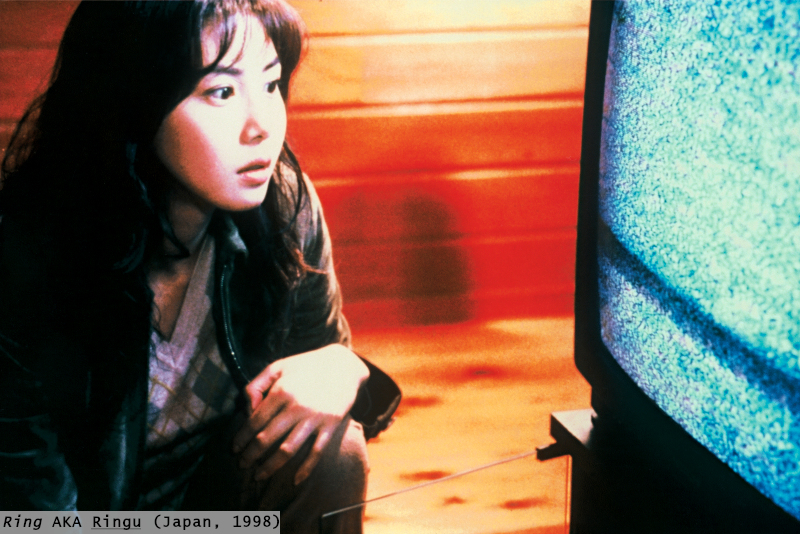
The slasher cycle of the 1980s and the ironic meta-horror of the 1990s shared a common assumption: the audience needed to be in on the joke, or at least in on the formula. Scream was brilliant and fresh (at the time) precisely because it understood and articulated every convention of the genre it was operating in (thanks to Kevin Williamson and Wes Craven). But once you’ve deconstructed something that thoroughly, rebuilding genuine dread is difficult (yet somehow they kept trying…to this day…but that’s a subject for another article).
Japanese horror wasn’t operating under any of those assumptions. It wasn’t interested in being clever about its own conventions. It was interested in atmosphere, in dread that accumulated slowly (and didn’t explain itself!), and in supernatural forces that followed their own internal logic rather than Hollywood’s. It was serious in a way American horror had largely forgotten how to be.
Ringu and the Door That Opened
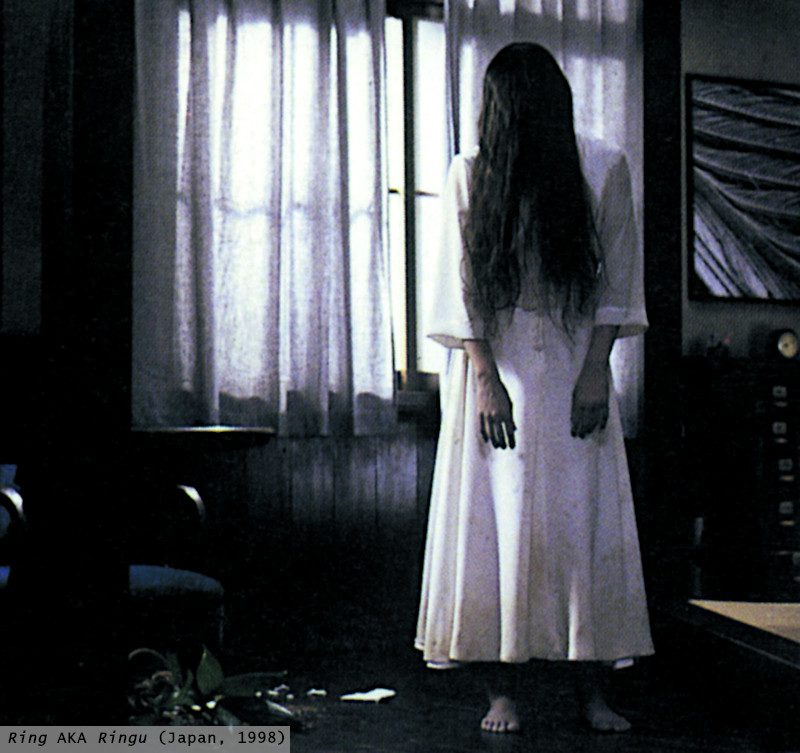
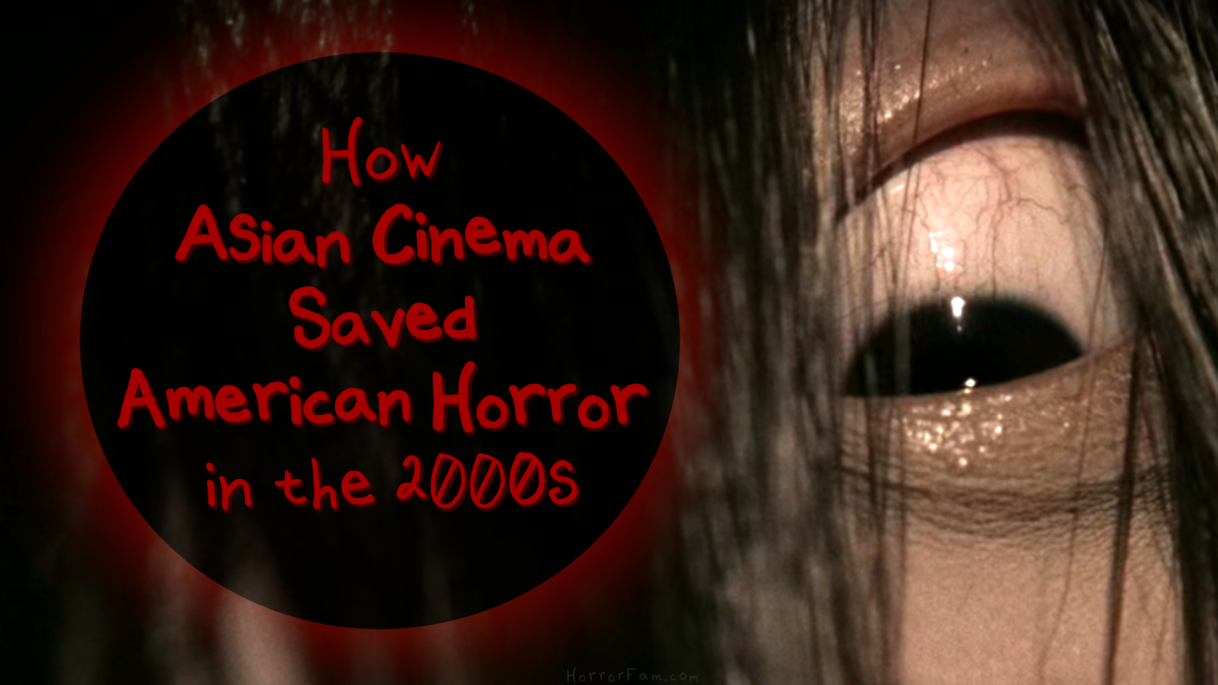
Hideo Nakata’s Ringu (1998), based on Koji Suzuki’s bestselling novel, became the highest-grossing horror film in Japanese history. The premise, a cursed videotape that kills its viewer seven days after watching it, tapped into a very specific late-90’s anxiety about technology spreading faster than anyone could understand or control. Sadako, the creepy pale long-haired figure who crawled out of the television, genuinely freaking out viewers, had bypassed rational thought entirely and hit something older and harder to shake.
Ringu circulated on import tapes and DVDs and at Asian film festivals in New York before Gore Verbinski’s American remake brought it mainstream in 2002. The Ring (2002) made nearly $250 million worldwide and sent a significant portion of its audience straight to the Japanese original. Most of them decided they preferred it. The American version was polished and effective. Ringu was genuinely unsettling and “gritty” in a way that was harder to explain and harder to forget.
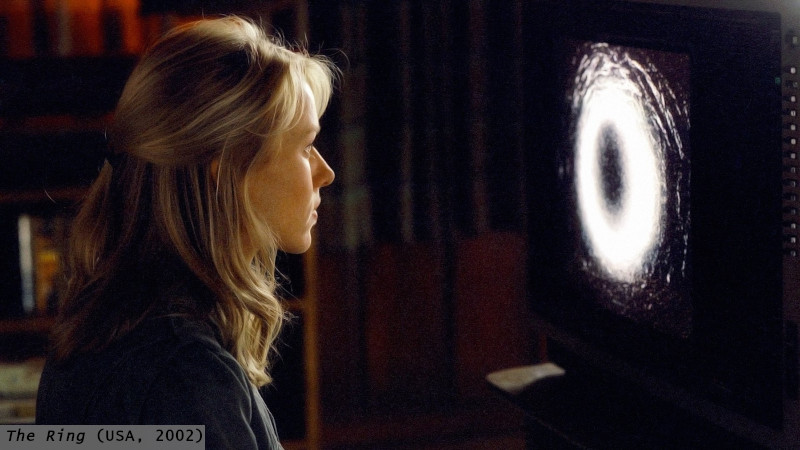
A pattern developed – American remake creates audience, audience discovers superior Japanese original – and would repeat itself throughout the decade.
The J-Horror Wave Hits
Hollywood moved fast once the money was on the table. The Ring‘s success triggered a full acquisition of Asian horror properties that ran through most of the 2000s.
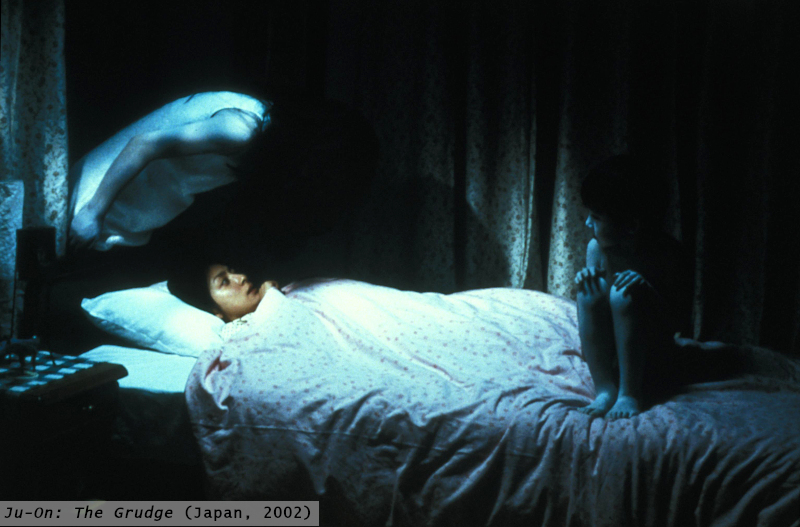
The Grudge (2004) remade Takashi Shimizu’s Ju-On (2002), with Shimizu himself directing the American version, making it one of the more successful translations of the era. The original Ju-On had already demonstrated that J-horror’s power came from a very specific cultural relationship with the supernatural, vengeful female spirits whose unresolved deaths created curses that spread like contagion, and Shimizu understood how to preserve that atmosphere for a Western audience better than most.
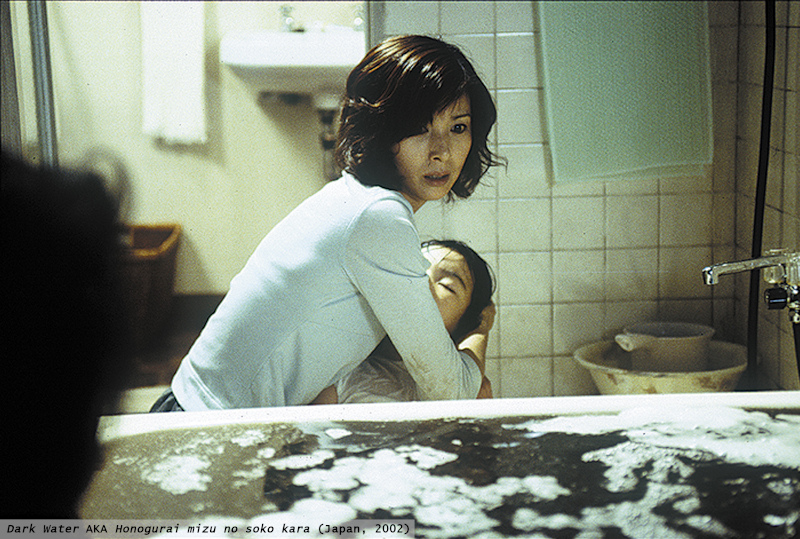
Dark Water (2005) adapted another Koji Suzuki story with Jennifer Connelly, steering away from the supernatural in favor of family drama and losing something essential in the process.
Pulse (2006) remade Kiyoshi Kurosawa’s Kairo (2001). One Missed Call (2008) took on Takashi Miike’s 2003 original.
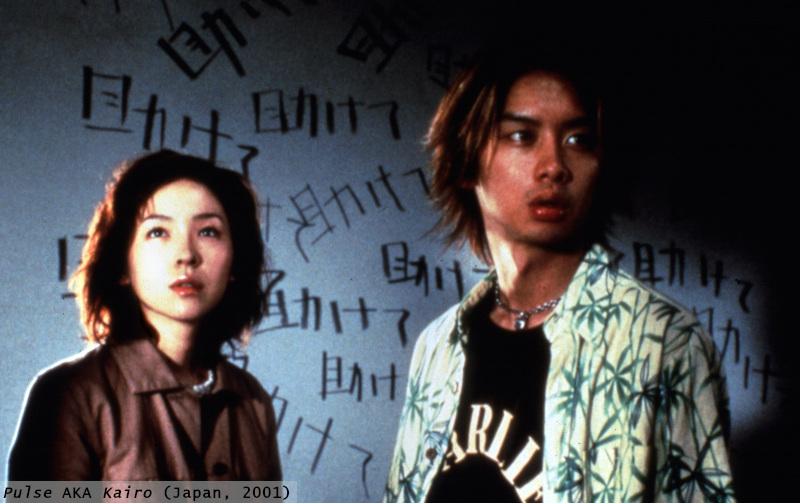
The results ranged from decent to forgettable, and the pattern was consistent: the more a remake tried to explain and resolve what the original left ambiguous, the less effective it became.
What the Originals Were Actually Doing
J-horror’s power wasn’t just aesthetic. Though the aesthetic – long dark hair, pale skin, jerking unnatural movement – was genuinely effective and widely imitated. It came from something cultural.
The vengeful spirits at the center of these films reflected specifically Japanese anxieties about repression, social obligation, and the consequences of things left unresolved. The horror came from rupture, from suppressed histories and feelings that refused to stay buried.
That’s a bit different from typical American horror. It gets under the skin differently, stays longer, and doesn’t offer the cathartic release of a monster defeated or a final girl surviving. J-horror endings frequently offer no resolution at all. The curse continues. The ghost doesn’t rest. The tape gets copied and passed on.
Western horror audiences weren’t used to that, and the discomfort it created was its own kind of effective.
The Ripple Effect
The J-horror wave did something beyond its immediate commercial impact: it opened American horror audiences to Asian cinema more broadly.
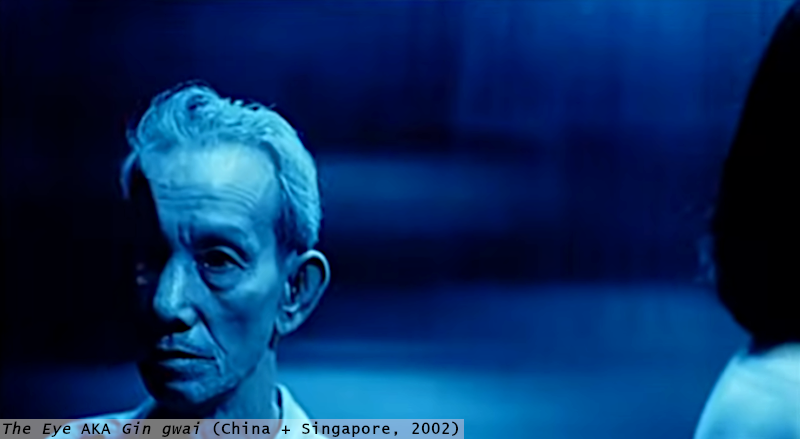
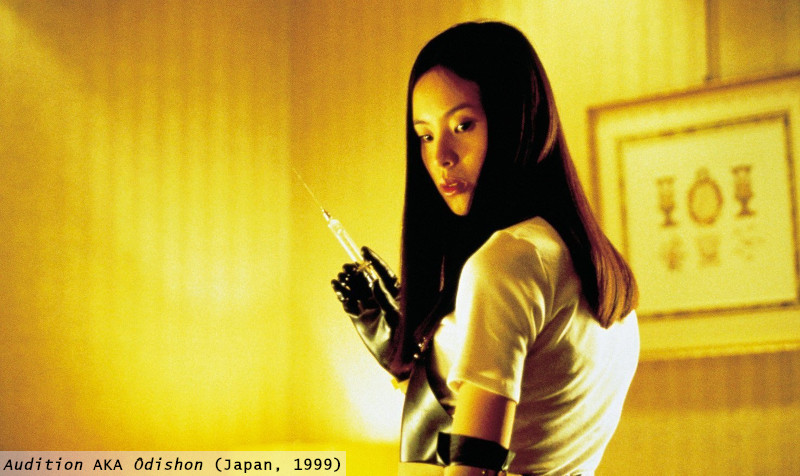
Viewers who came in through The Ring went looking for Ringu, then kept going. Park Chan-wook’s Oldboy (2003). Kim Jee-woon’s A Tale of Two Sisters (2003). The Pang Brothers’ The Eye (2002). Takashi Miike’s Audition (1999). A whole cinema of dread that had been operating outside the American market’s awareness suddenly had an audience.
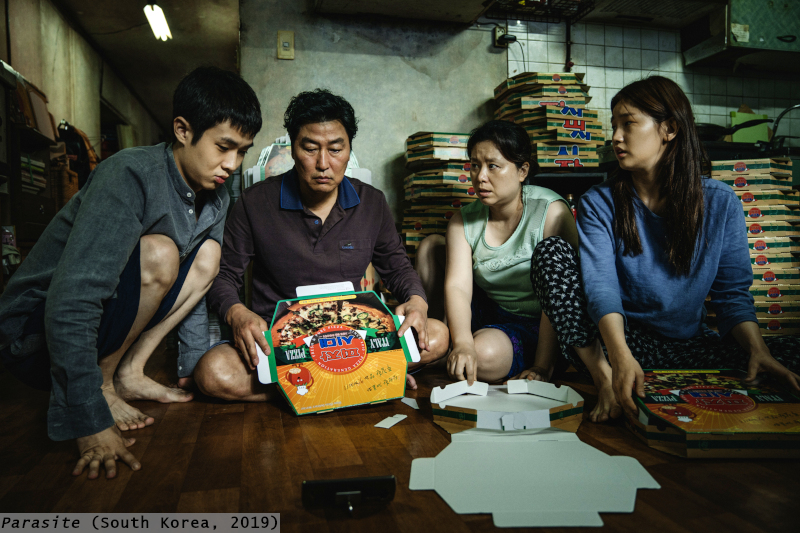
That audience has never really gone away. Korean horror and thriller cinema in particular has grown into one of the most critically respected bodies of work in the genre, culminating in Parasite winning the Academy Award for Best Picture in 2020. While Parasite isn’t typically considered a horror film, it’s still a moment that would have been unimaginable without the groundwork laid by the J-horror wave two decades earlier.
The 2000’s J-Horror Legacy
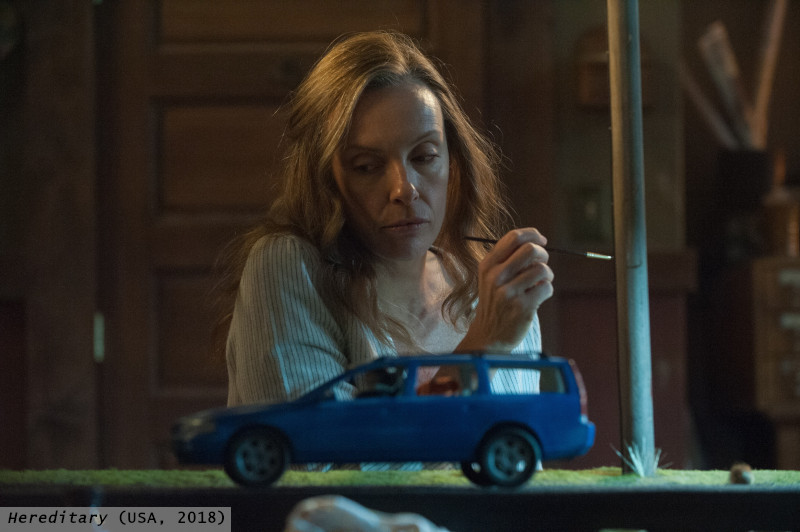
The era’s specific cycle of American J-Horror remakes burned itself out by the end of the 2000s. By the time One Missed Call arrived in 2008 to near-universal indifference, the formula had exhausted itself in much the same way the slasher cycle had a decade before.
But the influence didn’t end. The atmospheric, psychological, slow-burn approach to horror that J-horror introduced to mainstream American audiences reshaped what the genre could do.
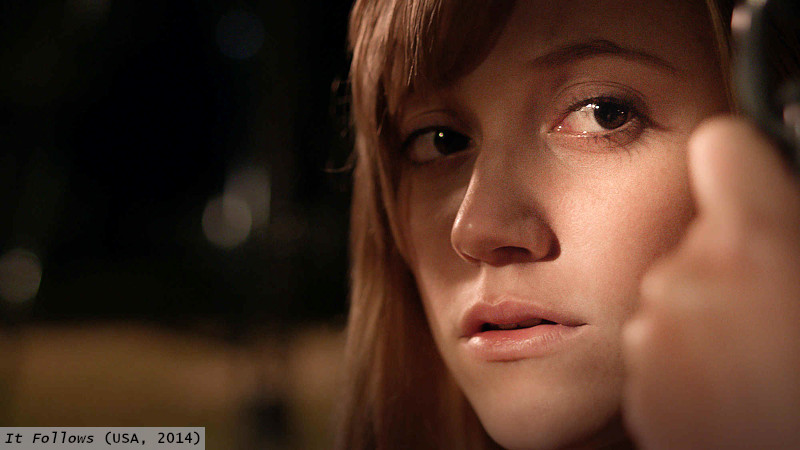
Films like Hereditary (2018), It Follows (2014), Smile (2022), Obsession (2026), and countless others have a “feel” to them that owes something to what came across the Pacific in the early 2000s. The patience, the dread, the refusal to over-explain: those weren’t American horror’s default settings before Ringu. They are now.
A cursed videotape did that. Koji Suzuki, who passed away in May 2026 at 68, wrote it. He deserved more credit than he got while he was alive. (For a deeper look at Koji Suzuki and the wave he started, read my full tribute on my website FEELING CREATIVE?).
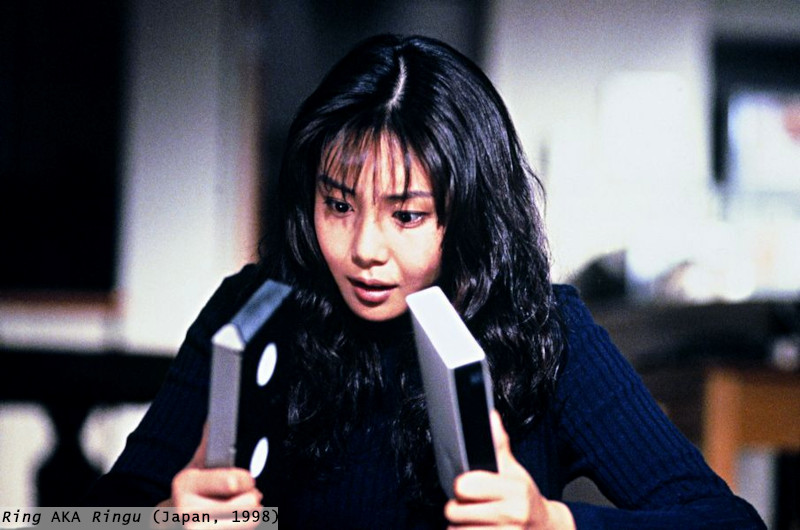
Let me know in the comments what your favorite Asian horror films are. Were you a horror fan when the early 2000’s J-Horror invasion took over the USA? Although I far prefer Ringu (1998), one of my favorite memories of the era was seeing The Ring (2002) in a packed movie theater – people were genuinely freaking out when Samara crawled out of the TV. I’d love to hear YOUR experiences!
This guest article was written by Mike Meyerson. Read more about him in his Author Bio below!

Images for this article were purchased on MovieStillsDB except for The Eye which is a screenshot from the original trailer.