

As a nomadic van lifer, I’ve spent a good deal of time traversing steep, winding forest roads along the Pacific Northwest coast and being sucked in by the dizzying beauty of the woods there. It’s an environment where people chase connection to nature and the introspection that requires. Social media influencers often present such a connection as immediate, enlightening, and always optimistic. But the reality is that any kind of true introspection requires wrestling with painful truths about ourselves and things we may never want to face. My memories of Oregon are clothed in the beauty of its woods, but I’ve gotten stuck in the mud there, too. I found a place of refuge there as my dog recovered from a health scare, and I spent long days in those woods regretting my decisions to binge drink again and again.
The Oregon woods may sometimes obscure, but they can also bring harsh clarity, which is why I strongly connected to Erich Cannon’s His Monster, an independent horror film that brings East Asian folklore to the Oregon coastal forests in a beautiful story about addiction, denial, responsibility, love, and acceptance.
Who is Erich Cannon?

Erich Cannon has a well-rounded background in film. From his roots working as a PA on movies like 127 Hours to directing family adventure movies like Braving Rapids (2025), Cannon has proven he can seamlessly merge his passion for storytelling, nature, and characters into a wide range of genres and media fields. In addition to movies, Cannon has made ad content for Microsoft, Amazon, Fantasy Con, and Cafe Rio and produced and directed music videos for Phantogram, The Flaming Lips, Lindsey Stirling, and more. He’s produced Christmas movies, comedies, dramas, and more under his Compassionate Disaster label, and is producing the upcoming horror film The Cuckoo Clock directed by Lisa Jay.
Braving Rapids is about a family that discovers a lost wolf cub and works to save it from poachers. As the caretaker of a kind of wolf myself, I love Cannon’s interest wolves and his passion for wildlife and environmental causes in general, as evidenced through some of his production work, like the 2024 documentary film Columbia River Canoe Project.
His Monster is Erich Cannon’s horror feature directorial debut, and I think it’s quite a powerful foray into the genre. With his arsenal of production, writing, and directing experience, Cannon has proven himself to be an exciting filmmaker who weaves gorgeous imagery with stories that feel intensely personal. I hope we get more horror from him.
What is His Monster about?

James is a man in the grips of a strong alcoholic addiction, one that is pushing his marriage to the breaking point. As things come to a head, a tragedy occurs that draws James deeper into a spiral of grief, paranoia, and fear. To avoid reckoning with the grim reality of his situation, James convinces himself that a literal monster stalks the woods around his cabin and is responsible for his great personal loss. James makes it his mission to track down this beast to end its insatiable bloodthirst once and for all.
By reading the plot description, you can foresee the metaphor at play, but while this analogy might be well-tread in horror cinema, Erich Cannon contextualizes his take within a compelling, gut-wrenching dramatic narrative and weaves reality and fantasy through beautiful camera work, non-linear storytelling, and a genuinely creepy creature taken from East Asian folklore.

Gabriel Casdorph plays James perfectly, demonstrating his devastation, his lack of willpower, his struggle with alcohol, and ultimately his desire to change and make things right. Ashley Song delivers a strong performance as Su-Yeong, James’ wife, who attempts to move on with her life even as she feels connected to James through mutual grief. Song powerfully embodies Su-Yeong’s conflict – her empathy and love for James always collides with exasperation and anger over his chaotic and illogical behavior and his apparent need to live in denial.
James attempts to finally move on himself, but he only does so externally, by rebounding in love and in liquor and refusing to interrogate himself directly. He returns to the bar, where he meets Mira, played by Meranda Long with an effortless lightheartedness. They develop a connection, and Mira forces James to confront his repressed fears.
And yet, the monster is still out there. People are still winding up dead, a police investigation unfolds, and James obsessively hunts for the creature he’s certain is responsible for his loss as he slowly pieces together his fractured memory.
What is the monster in His Monster?

If you hear the words “cryptid” and “Pacific Northwest” together, your mind goes immediately to Bigfoot. That’s why your mind is not Erich Cannon’s! In His Monster, the titular “monster” is a spirit of Japanese and Chinese folklore, a creature called a shōjō that dwells in coastal mountains and looks like an orangutan with red hair and a red face in Japanese traditions, and ancient Chinese stories tell of a human hybrid version called xingxing. The shōjō spends most of its days consuming large amounts of alcohol, making it the perfect folk creature to manifest within James’ life.
Classic literature presents shōjōs as happy and silly creatures, but this is horror and Cannon gives his version the proper horror treatment. I won’t spoil his unique take on the creature design for his northwestern shōjō but suffice it to say – it’s fantastic practical effect goodness.
And the appearance of James’ shōjō intensifies his personal struggle. Gabriel Casdorph plays this with real vulnerability and honesty. You can empathize with James, and even sympathize with his grief and turmoil, but you can also get really pissed at him when he makes stupid decisions. I don’t want to spoil the story too much, but one thing I want to say is that I truly appreciate how Cannon knows James needs to take responsibility for his own actions completely and doesn’t place that narrative burden on the two women in his life. Because James lives in denial for so long, they are absolutely harmed by his actions, and there are severe personal consequences for James behaving this way.

So, he must learn to look truly look inward for the first time. James never escapes accountability and is forced to contend with himself in the end. In my experience, that’s the only way to rid yourself of this monster.
If you know me, you know I love creature features, so that already drew me in. The shōjō is a brilliant vehicle to carry Erich Cannon’s metaphor between the literal and fantasy worlds of His Monster. But it was the film’s narrative and message that spoke to me personally. I am 32 months sober from alcohol myself, and I understand exactly why many horror filmmakers represent this specific struggle with physical monsters. A monster is something we instinctively hide from as kids, and that’s something we carry with us into adulthood until life shows us what those monsters represent. For each of us. And then we can choose to face them or continue hiding, continue blaming others or expecting others to save us from them.
His Monster says you have to stand in front of the big, scary thing itself and say, “Only I can expel it, because it’s a part of me.”
***This review was written by Isaiah Swanson***
Where to watch His Monster
At the time of this review, His Monster isn’t currently streaming (it’s still showing in festivals and some theaters – you can keep up with where it’s playing next on Erich Cannon’s Instagram page!), but I found it listed on JustWatch. So, when His Monster does hit streaming (likely Fall of 2026), the affiliate buttons I’ve included below will update with wherever it’s currently available to watch. Using HorrorFam.com’s affiliate links is a great way to enjoy the films you love while supporting our website at no additional cost to you. –Lauren*

Where His Monster (2025) is streaming now:
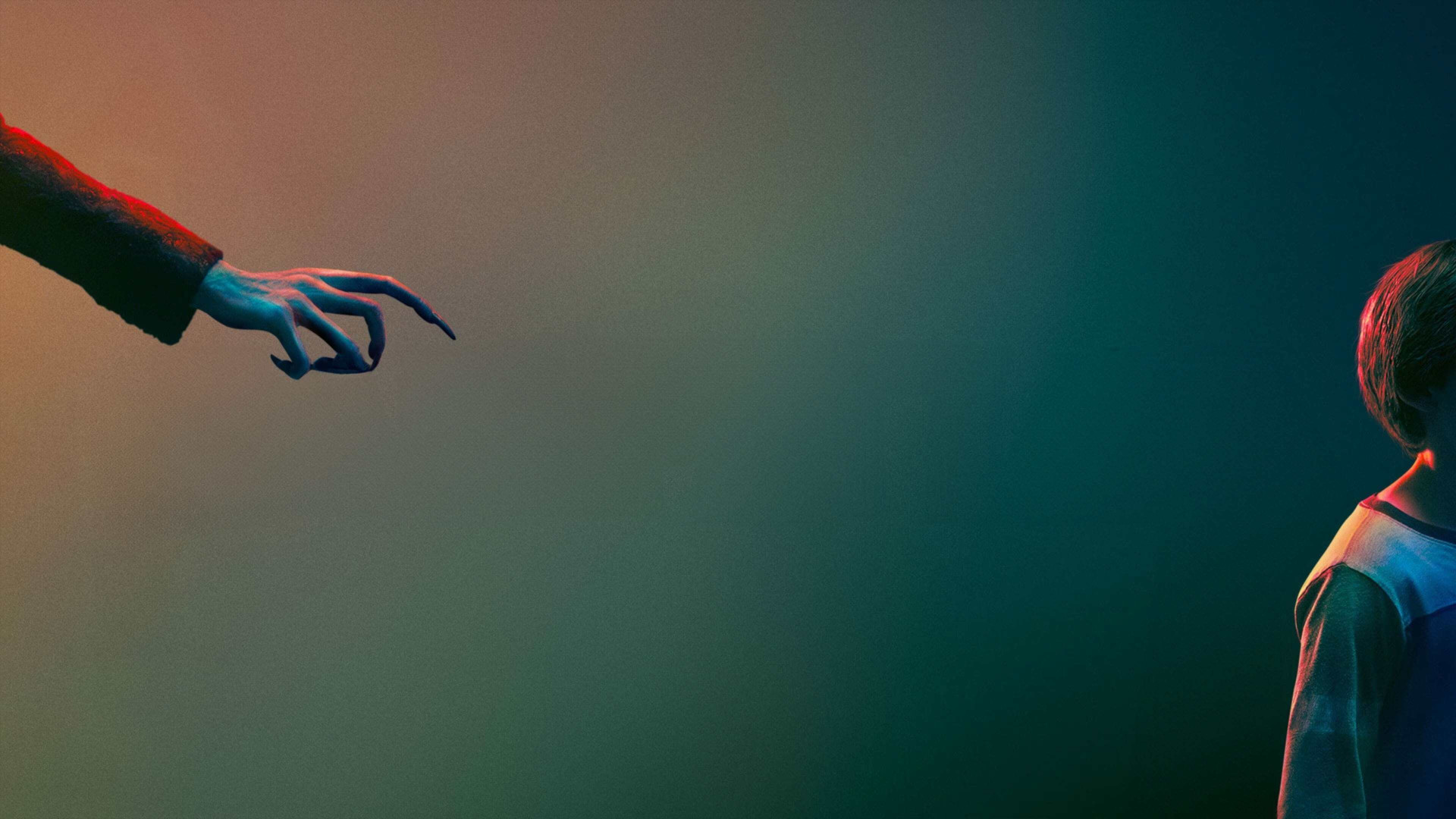
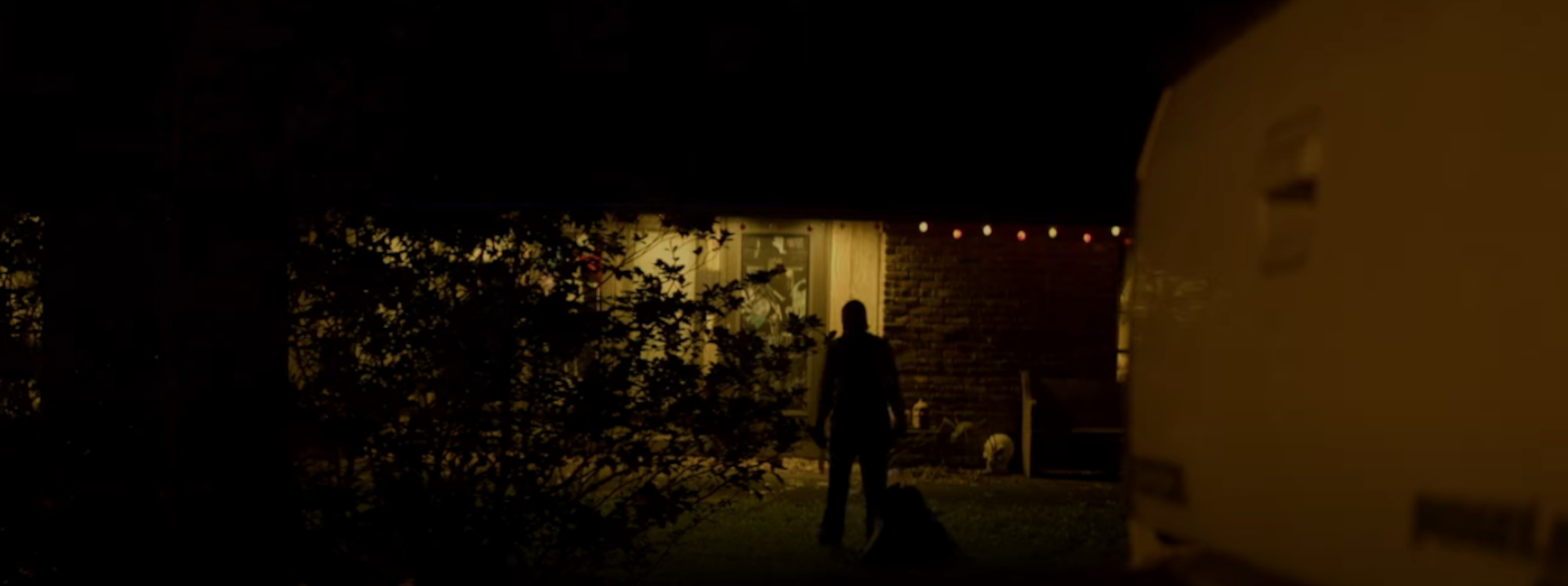
Images for this review are from the official His Monster website from the “Press” section. The featured image is a mash-up of the official His Monster poster (on the left) and then a free stock photo of Oregon woods from Pixabay.



Isaiah Swanson’s knowledge and sensibility of the horror genre are astonishing. But in this review, he goes even further, drawing on life experience and evoking personal demons to analyze the film. It takes a lot of courage to be that honest. And his writing is always free of spoilers (something that already ruins a conventional film and simply kills a horror production). A great review that makes the reader interested in discovering not only His Monster, but also its director.
I love when Isaiah writes to me and asks if he can review something for his “Izzy’s Eerie Indies” column! It always means he’s found a horror film and/or indie horror creator that he’s truly passionate about and I know he’s about to go ALL OUT when he talks (writes) about it. It’s the same for ALL of us here on HorrorFam.com (we only write 52 posts per year, so we only bother writing about things we each LOVE!!), but Isaiah’s articles are super fun because he has a knack for finding films that most of us haven’t even heard of until he gushes about them. It’s awesome to discover new horror things. And it brings me such immense joy, as an editor, to read about what each of my friends (and the occasional passionate guest writer) have enjoyed recently in the horror genre. 😀