
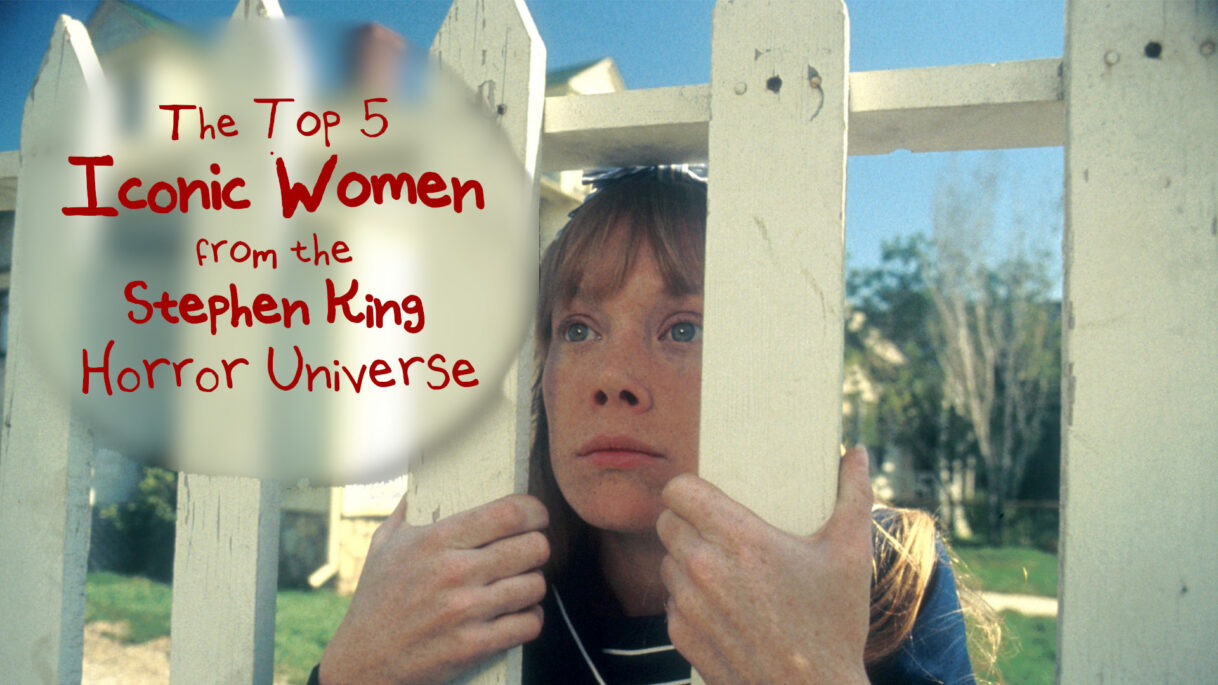
Stephen King gets a lot of credit for his monsters: Pennywise, Cujo (Rest in Peace, you good rabid boy), The Overlook Hotel, etc. But, if you ask me – and clearly you did, seeing as you clicked on this article – the most frightening, interesting, and downright unforgettable characters King ever put down on paper aren’t his supernatural monsters creeping around in the dark… They’re the women.
The female characters in Stephen King’s works are, and I’m not exaggerating, some of the most layered, complex, and truly formidable figures in horror fiction. Some of them will make you cheer. Some of them will make you cry. Some of them will make you privately decide never to be rude to anyone you meet, just in case. They are warriors, survivors, sometimes murderers, and (in at least one case) a woman who will chop your foot off and not even blink.
So, pull up a chair, pour yourself a glass of whatever’s your poison, and let’s celebrate the five women in the Stephen King universe who really run the whole frightening show.
This post contains affiliate links. If you watch a movie or purchase a book we’ve recommended using our links, you’ll be helping to support HorrorFam.com at no additional cost to you!
5. Dolores Claiborne from Dolores Claiborne (1992)
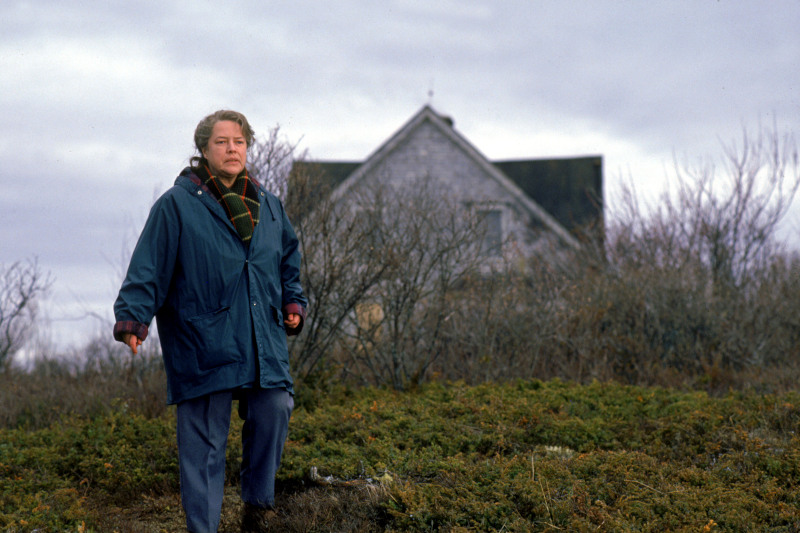
“Sometimes being a bitch is all a woman has to hold onto.”
I’m starting with number five and she’s a woman who deserves to be on every list ever made, up to and including lists of people you want on your side in a bar fight, a courtroom, or zombie apocalypse.
Dolores Claiborne is not, by any means, glamorous. She doesn’t have telekinetic powers, hasn’t been kidnapped by some lunatic superfan, or pulled into a post-apocalyptic wasteland. What she has done is spend decades silently enduring a life of abuse, poverty, and brutal hardship on a small island off the coast of Maine. And she’s come out the other side with a spine made of pure and solid granite.
The novel of Dolores Claiborne is told completely in her voice, something I think is one of Stephen King’s most impressive accomplishments as a writer. There are no chapter breaks, or any other perspective. It’s just Dolores, sitting in a police interview room, and talking. And, for just over 300 pages, you cannot put it down. She’s furious and funny and heartbreaking. Her voice is so vivid that you could almost swear you can feel the cold Maine wind and smell the sea salt.
In brief, the plot of Dolores Claiborne is that Dolores has spent the majority of her life being suspected of murder (and it’s fair; she definitely killed her husband and has absolutely no regrets). Now, her elderly employer Vera Donovan has turned up dead and the police are giving Dolores the side-eye again. So, Dolores does what any sensible woman would do: She explains herself. At great length, and with the receipts.
What makes Dolores so fascinating is that, in every sense, she’s just an ordinary woman in extraordinary circumstances. She didn’t ask for any of this, she just wanted a decent life for herself and her children. And when the system failed her, the law couldn’t help, and there was nowhere left to turn, she handled it herself. Was it murder? Well, technically yes. Was Joe St. George the absolute worst? Also, YES. Stephen King isn’t asking us to condone what Dolores did, he’s just asking that we understand it. And we really, really do.
Dolores also has an odd psychic connection to Jessie Burlingame, the protagonist of Gerald’s Game. The two women share a vision during the 1963 solar eclipse which links their experiences of abuse and survival in ways Stephen King never quite explains, but doesn’t need to. It’s one of those eerie and beautiful moments that remind us King operates on a frequency that most of us can barely tune into.
If Dolores Claiborne was a real person, she would be the sort of woman who bakes the best pies you’ve ever had, knows where all the bodies are (sometimes literally) buried, and will go to the wall for anyone she loves. You want her at your dinner table. You do not want to be her abusive husband.
Read Dolores Claiborne by Stephen King:
Watch Dolores Claiborne (1995):






4. Susannah Dean from The Dark Tower series (1982-2012)
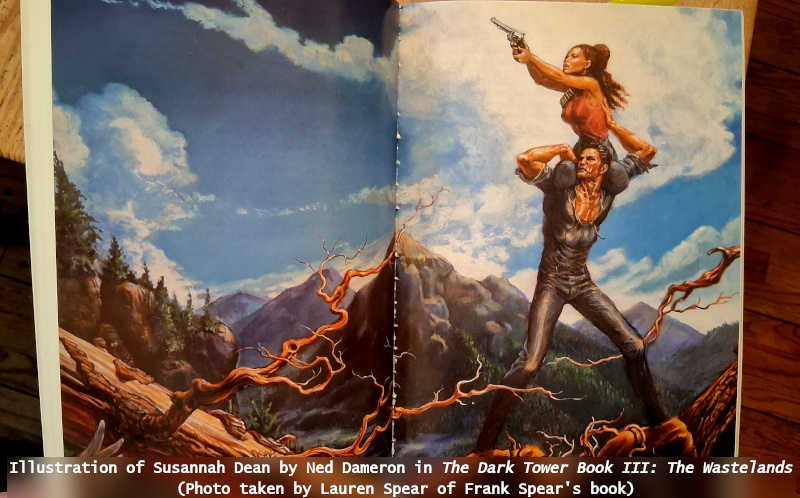
A Woman Who Contains Multitudes.
Susannah Dean REALLY has multitudes – multiple personalities, multiple worlds, multiple everything. Ah, Susannah. Where do I begin…?
Susannah Dean, who was born Odetta Holmes is also known as Detta Walker, later known as Mia, and finally – triumphantly – as herself, I would argue is the most complicated character in the Dark Tower series. And that’s really saying something in a saga which also includes a psychic boy, talking lobster monsters, and a gunslinger who’s pretty much the most stoic man in the universe.
Susannah enters the frame in the second story, The Drawing of the Three, as a Black civil rights activist in 1960s New York who, through the sort of cosmic tribulations that only Stephen King can explain, gets pulled sideways in time into Roland Deschain’s ka-tet and winds up in a post-apocalyptic wasteland. She’s a crack shot with no legs below the knee. She has dissociative identity disorder, with one personality (Odetta) being controlled and refined, and the other (Detta Walker) being fantastically unhinged in ways that are equally terrifying and, really, pretty iconic.
Detta Walker truly deserves her own appreciation. Is she a hero? Is she a villain? Is she a trauma response made into human form? Yes, yes, and absolutely yes. She’s the part of Susannah who learned to be cruel because the world demanded it of her. She’s cunning, foul-mouthed, and totally feral in ways which, if you’re being honest, you’d have to admit are pretty much understandable given all she’s been through. The scenes where Eddie Dean first meets Detta and has to figure out how to survive around her without getting his face bitten off are really some of the funniest and most nerve-wracking in the whole series.
Eventually though, through one of Stephen King’s more emotionally resonant plot developments, Odetta and Detta are merged into Susannah; a whole person carrying both sides of herself. It’s a beautiful piece of character writing, and it always hits hard.
Then, because it’s Stephen King we’re talking about, Susannah’s journey becomes even more complicated. She gets pregnant in a way that involves demonic possession (of course), carries a creature named Mordred (basically the world’s worst baby), and eventually has to fight in order to reclaim her own identity and body in ways that would exhaust literally anyone else. And throughout ALL of it, Susannah Dean remains one of the most fierce, resilient, and fully human characters in the entire series.
By the time the Dark Tower saga ends, Susannah Dean has been through more than most other characters could experience in ten novels. She’s found herself, lost love, travelled through various dimensions, shot an incredible number of enemies, and comes through it all still standing. She makes it, and finds her happy ending. She deserves every moment of it and, frankly, a long holiday somewhere warm where people aren’t trying to kill her or use her body as a vessel for evil.
If Susannah Dean were a real person, I think she would be the sort of woman who, when life hands her lemons, she’d shoot the lemons to make lemonade, then use that lemonade to barter her way to a different dimension.
Read The Dark Tower series by Stephen King:
3. Beverly Marsh from IT (1986)
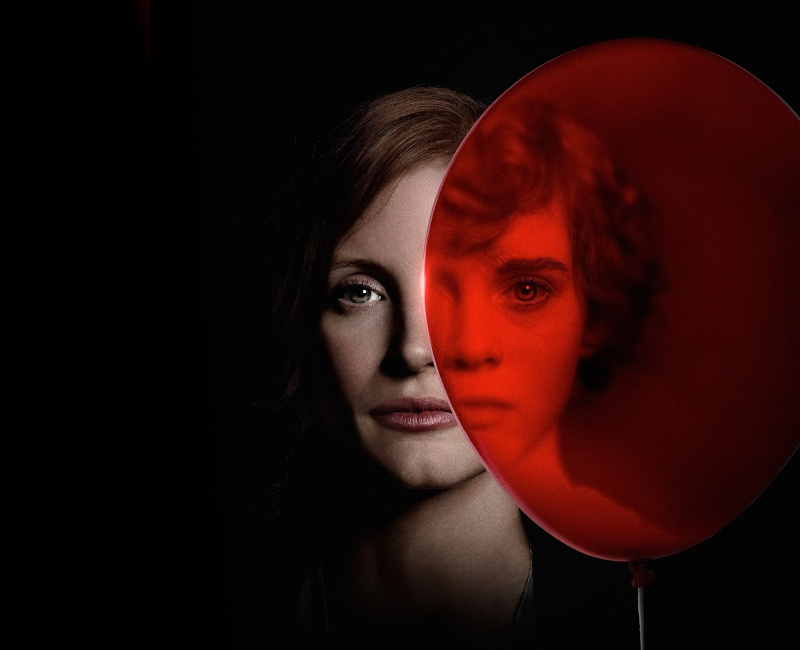
The Girl Who Refused to Be Afraid (Mostly)
Beverly Marsh, in the cultural imagination, is maybe most associated with her iconic red hair and her role as the only girl in the Losers Club. But reducing Bev down to the “girl one” is like reducing IT down to the “clown one.” It may be technically accurate, but it’s criminally underselling the whole thing.
Beverly Marsh is one of the most fully realized coming-of-age characters in Stephen King’s bibliography. She grows up in a home with a truly frightening, abusive father who fears the woman she is turning into, gets tangled up in a horrifically awful relationship with an abusive husband as an adult (as trauma has a way of finding familiar patterns), but throughout all of it she remains the emotional heart of the Losers Club, and one of its bravest members.
As a child, it’s Beverly who’s the best shot among the Losers. Bev wields the slingshot, and it’s Bev who hits Pennywise with the silver slugs. In a gang of boys who are all, collectively, terrified most of the time, Beverly Marsh is the one who aims, fires, and does. not. miss. That isn’t a small thing, that’s everything.
As an adult, her storyline in IT is all about reclaiming herself; from Tom, her abusive husband; from the fear she’s carried since childhood; and from the Lovecraftian horror that never really let go of Derry or the people who lived there. She returns to face Pennywise a second time not because she’s fearless; she’s afraid and chooses to go anyway. I think King is good at writing that distinction, and Bev is one of his best examples of it.
There’s a wildness and a warmth to Beverly Marsh that makes her one of Stephen King’s most beloved characters, and rightly so. She’s that sort of person who draws people to her, not because she’s some perfect ideal, but because she’s real. She’s funny, and sad, and fierce, all at the same time.
If Bev were a real person, she would be your most loyal friend, who always shows up when things go wrong, and doesn’t flinch away from the scary stuff. She always knows just what to say, and would absolutely kick your ass at darts.
Read IT by Stephen King:
Watch IT (2017):



2. Annie Wilkes from Misery (1987)
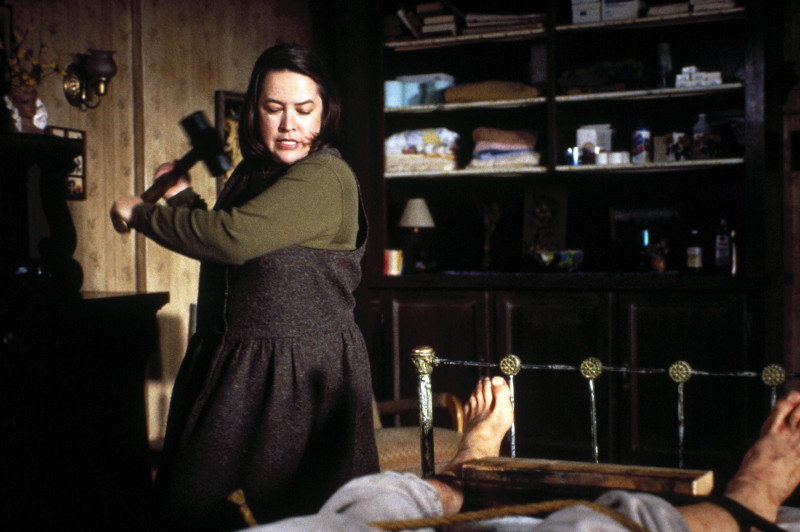
She’s Your Number-One Fan (God Help You)
Annie Wilkes. Annie Wilkes…
By most reasonable metrics, Annie Wilkes is the most terrifying human being in Stephen King’s body of work. This is a universe which includes Randall Flagg, Pennywise, and the whole gang of guests in the Overlook Hotel. What makes Annie so uniquely, and bone-chillingly scary, is that she has no supernatural powers. She’s just a person. A person with an axe, a blowtorch, and a very strong opinion about your literary choices. She has no interest at all in your suffering, except insofar as it helps you create the content she wants.
The premise of Stephen King’s Misery is very simple: Romance author Paul Sheldon crashes his car in a blizzard, Annie Wilkes rescues him, and she informs him that she’s his number-one fan. Under other circumstances, that would be touching. But Annie Wilkes is also deeply and profoundly unwell. And when she discovers that Paul has killed off Misery Chastain, her favorite character, well, things take quite the turn.
A turn which involves being kept prisoner in a remote farmhouse, followed by a turn that involves your foot, and later your thumb. Everyone (even non-horror fans!) knows the scene. The hobbling. Annie’s actions during THAT scene have entered our cultural vocabulary as a shorthand for creative passion taken to its absolute and irreversible extreme, and still remains one of the most viscerally horrific moments in King’s work. And it’s not because of any ghost or monster – it’s because of one woman with a very specific set of expectations, and no tolerance for disappointment.
I think what makes Annie Wilkes such a great character instead of “just” a great villain is the level of complexity King brings to her. She isn’t just evil. She is quite obviously suffering with severe mental illness, and there are moments, fleeting and unsettling, where we can almost feel for her. Almost. She’s lonely and, in her way, brilliant. She truly loves Misery Chastain with a passion that, if it had been directed elsewhere, could have been beautiful. But Annie Wilkes doesn’t really do “differently.” She does things her way, and God help any man who disagrees.
Kathy Bates won an Oscar for playing Annie Wilkes in 1991, and it was totally deserved. It’s still one of the greatest performances in horror movie history. But even Bates’s incredible performance is working from the brilliance of the woman King wrote: A woman who is funny and frightening and sad all at the same time.
There’s a reason that, even now, when people talk about obsessive fans, the term “Annie Wilkes” comes up. And why “Cockadoodie” has become a horror fan term of endearment. Annie Wilkes is an absolute icon. She scares you, yeah, but she also asks uncomfortable questions about obsession, fandom, and what we’re owed by the artists we love. (And the answer is nothing. We are owed nothing. Annie, please put down the axe…)
If Annie Wilkes were a real person, you would be very, very nice to her. Especially if she found out you were one of those cockadoodie brats who read the last chapter of a book first…
Read Misery by Stephen King:
Watch Misery (1990):
1. Carrie White from Carrie (1974)
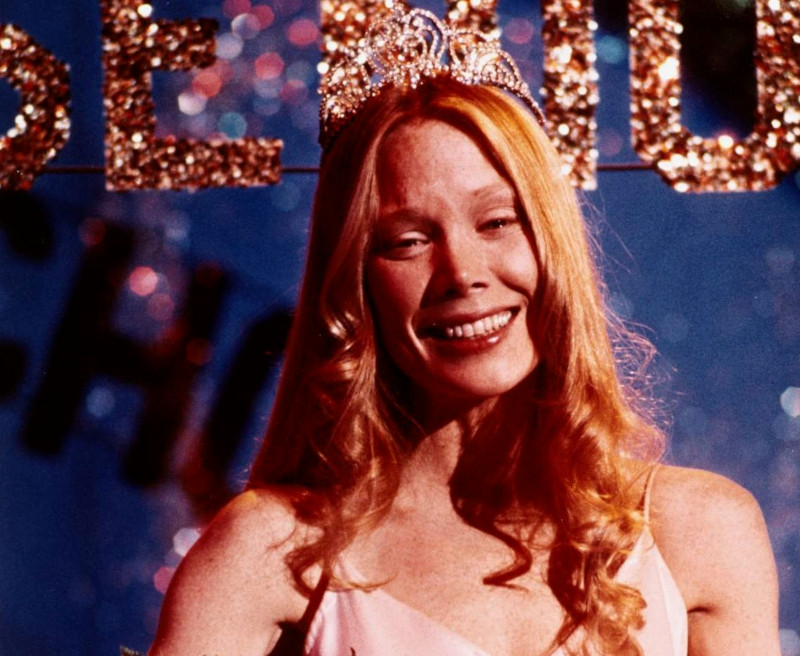
The One Who Started It All.
Here we are. Number one. The woman who launched a thousand nightmares, a thousand prom dress Halloween costumes, and launched a career that changed horror fiction forever:
Carrie White.
Carrie was the first published novel of Stephen King, famously rescued from the bin by his wife Tabitha, who read those pages and urged him to keep going. And the character at the heart of it, that girl dripping in pig’s blood with the burning eyes and the devastating power, is the reason we’re all here. King has written bigger, and more celebrated novels but he has never, not once, written anything or anyone more mythological than Carrie White. And it took me a long time to come up with that word.
Carrie White is every teenager who ever felt unseen. She’s every teenager who ever felt unloved and humiliated. She is every person who has ever been made to feel wrong just for EXISTING.
Carrie is the end product of a cruel and religiously fanatical mother (Margaret White, who will feature high on my list for Most Terrifying Stephen King Mother, should you ask for me to write it) and a school filled with classmates who bully her with a vicious but casual indifference. She’s awkward and lonely, desperate for connection, and when she ever-so-briefly thinks she’s found it – when she thinks she’s found a friend in Sue Snell and a prom date in Tommy – she lets herself hope. For a moment.
Then the bucket drops.
And Carrie White burns it all down.
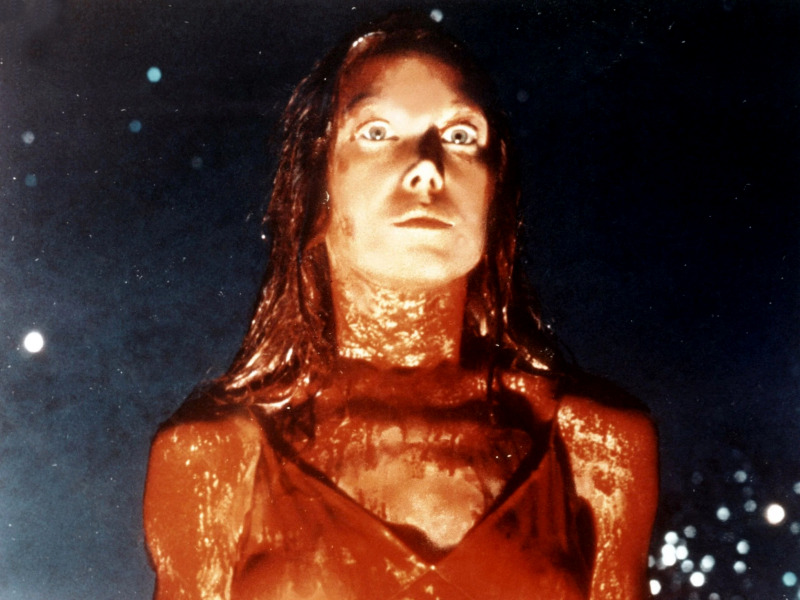
The ending of Carrie, with the prom and pig’s blood and the utter destruction of Chamberlain, Maine, is one of the most cathartic and devastating sequences in horror fiction. I think it’s because King has spent the entire novel making damn sure you know exactly why Carrie is the way she is. We go through every humiliation; the shower scene, the tampons, her being locked in the prayer cupboard by her mother. When that bucket falls, we aren’t just scared of Carrie; we’re heartbroken for her. We understand why that dam breaks. We wish it hadn’t but we can’t look away.
I think the true genius of Carrie White as a character is that she’s both the victim and the monster. And King will not let us separate the two. This isn’t a story about some evil girl with powers; it’s a story about what happens when you treat a person like a problem to be mocked and contained, then eventually she stops believing she has any reason to hold back. Yes, this is a horror novel. But it’s also a tragedy.
I read Stephen King’s Carrie when I was 10, and thought something along the lines of “isn’t horror was supposed to scare you, not make you want to cry?” Carrie White deserves better. She deserves better from her mother and classmates, and the whole town of Chamberlain. She didn’t get it. What scared me then, and still does today, is that the horror of the novel isn’t the telekinesis, it’s the fact that every single thing which happens to Carrie White was totally preventable. The monster in Carrie isn’t Carrie White, it’s all those who failed her.
If Carrie White were a real person, she would be, and she is, every kid out there who has been bullied, every kid who has been made to feel like they don’t belong. King grasped this when he wrote her, and his readers have understood it in every decade since. She’s more than a horror icon. She’s a mirror.
In every sense, she’s the Queen.
Read Carrie by Stephen King:
Watch Carrie (1976):




One Last Thought on Women Written by Stephen King…
I think it would be easy enough to create a list of Stephen King’s female characters and just stop there. But it’s worth pausing a little to think on how remarkable it is that these five women – all of them different in temperament, circumstance, and the nature of their power – all share certain qualities. They are survivors. In their own way, they are warriors. They are fully realized humans, with inner lives, histories, and contradictions. They aren’t just props or plot devices.
Over the years, King has had his critics. The conversation about how he writes women is long and nuanced, and there’s no argument from me about that. But Carrie, Annie, Beverley, Susannah, and Dolores are there as proof that, at his best, Stephen King writes women as he writes all his best characters; with commitment, total empathy, and an unblinking willingness to let them be complicated.
Those women aren’t here to be rescued, they rescue themselves. Or they will burn everything down trying. Either way, you won’t forget them. The world of horror is better for them. Even Annie Wilkes. Maybe especially Annie Wilkes. Now please excuse me, I’m going to make sure all my doors are locked.

Unless otherwise stated, images for this article were purchased via MovieStillsDB.



Another great article by Adam Page. His viewpoints are knowledge supported. I completely agree with the analysis. I only have a slight disagreement regarding the hierarchy. The only place Annie Wilkes can occupy on any list is first. And how come that possessive female force called Christine is left off this list? Just because she’s a car?! Just kidding. Page is always a good read; it’s easy to scroll through his paragraphs. Looking forward to his next article.