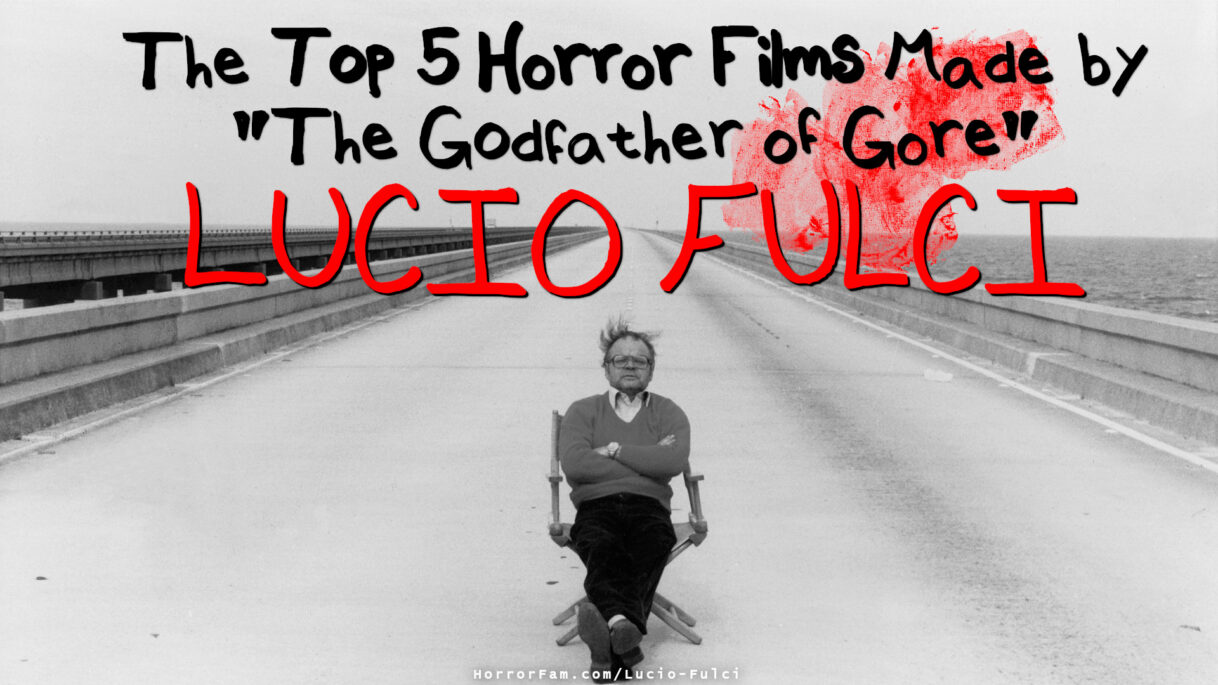
There are directors you admire, directors you respect, and directors you love in the same way I love my dog even after she’s pulled an entire roast chicken off the kitchen counter. Lucio Fulci belongs firmly in that last category.
Lucio Fulci didn’t make tidy movies. His plots wander off mid-scene like the uncle with too much to drink at a wedding, his characters make decisions that make you wonder how they dress themselves in the morning, and his dubbing sounds like hostages reading a ransom note. But somewhere in the middle of all that chaos, the man produced some of the most startling, beautiful, and truly upsetting images European horror ever coughed up.
Before he was known as the “Godfather of Gore,” Fulci spent years grinding out comedies, westerns, and musicals. That comic training never really left him as there’s a mischievous, slightly cruel sense of timing in his horror. A sense that he knows just how long you can bear to look at something and then he holds it for three more seconds. Usually that something involves an eyeball.
So, the rules of this list: Five movies. No apologies for the acting. No apologies for the logic (because there isn’t any, and that’s part of the point). Counting down from five to one, so a zombie that fights a shark will be waiting like a prize in a cereal box. So, tuck a towel under your chin, because this will get messy…
This post contains affiliate links. If you watch a movie we’ve recommended using our links, you’ll be helping to support HorrorFam.com at no additional cost to you!
5. A Lizard In a Woman’s Skin (1971)
I’m starting my list somewhere maybe a little unexpected: in swinging London, a decade before Lucio Fulci discovered that the human eyeball is basically a grape with ambitions.
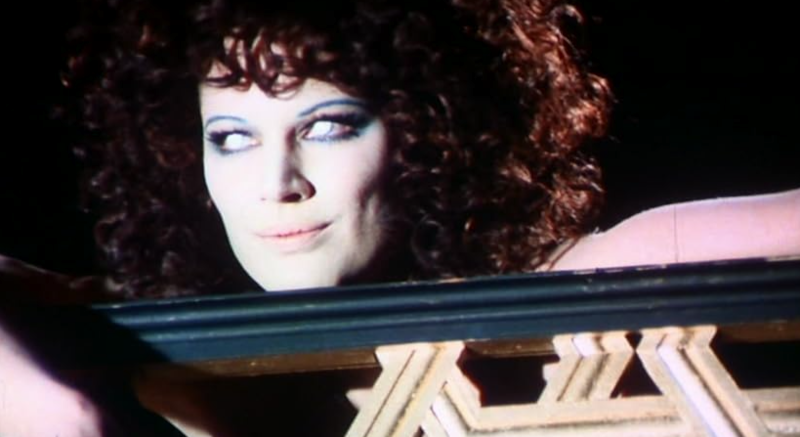
A Lizard in a Woman’s Skin stars Florinda Bolkan as Carol Hammond, buttoned-up daughter of a wealthy lawyer, who keeps having strange dreams about her next door neighbor, Julia, played by Anita Strindberg. Julia throws the sort of parties your parents warned you about, with lots of paisley, lots of nudity, lots of people lounging around looking like a prog-rock album cover. In Carol’s dreams, the two women end up tangled together, and then Carol stabs her. Julia then turns up dead for real, stabbed exactly as described in the dream journal Carol has helpfully been reading out loud to her psychiatrist. Oops.
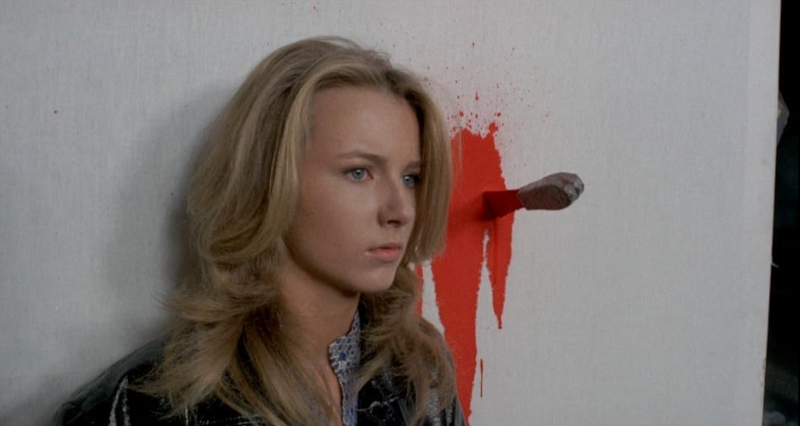
What comes next is a giallo movie that plays like Hitchcock after a weekend at a festival he didn’t mean to attend. Stanley Baker turns up as a whistling, very unimpressed Inspector Corvin, who wanders through the case with the air of a man who would rather be at the pub. Jean Sorel plays Carol’s husband with all the shiftiness of a man you just know has a second phone. The plot twists like a bag of eels, but it’s one of the few Fulci movies where the mystery actually holds together when you poke at it.
The real star, though, is the look. Fulci and his crew throw everything at the dream sequences: there are split screens, smeared color, a dinner party where everyone is naked, a corridor packed so tightly with bodies that Carol has to climb over them. The score by Ennio Morricone is all whispers and sighing voices and makes it feel like a migraine set to music. There’s also a great chase through a huge, empty building in which Carol is attacked by bats, which suggests Lucio Fulci had a thing about them long before The House by the Cemetery (more on that soon).
Then there’s the dog scene. Carol stumbles into a laboratory and finds four dogs, strapped down and cut open on tables, still alive with their hearts pumping. It’s horrible. The scene was also so convincing that Lucio Fulci was dragged into an Italian court accused of animal cruelty, and the special effects artist Carlo Rambaldi (later of E.T fame, which is a sentence that makes me chuckle) had to bring the fake dogs in and show them to the authorities to keep Fulci out of jail. That’s the Fulci experience in miniature: so good at being nasty that the law got involved.
So, why is A Lizard In a Woman’s Skin only number five? Because it’s the most respectable movie here, and respectability isn’t what horror fans come to Lucio Fulci for. It’s a smart and sexy, gorgeous giallo. It just doesn’t have that reckless, fever-dream lunacy of the following movies. Think of it like a starter: it’s elegant, well-presented, and with a faint smell of formaldehyde.
Where to stream A Lizard In a Woman’s Skin (1971):
4. The House by the Cemetery (1981)
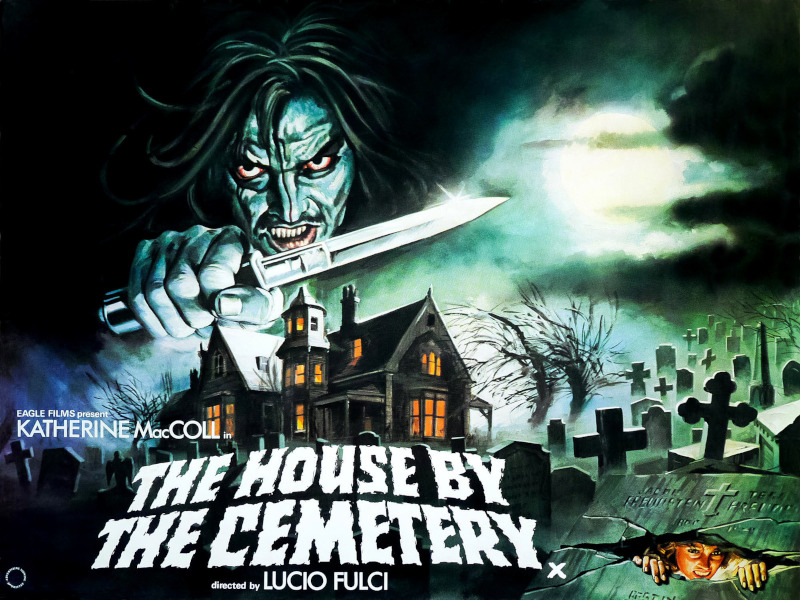
Rule #1 of buying property: if the estate agent is a bit cagey about why there’s a tombstone set into a kitchen floor, walk away. Don’t sign anything and don’t let your small son go down to the cellar.
The Boyle family do not follow this rule. Historian Norman Boyle, played by Paolo Maclo, moves his wife Lucy, played by Catriona MacColl, and their young son Bob from New York to the old Oak mansion in New Whitby, near Boston, to finish the research of a colleague who killed his mistress then himself there. A totally normal sabbatical, very relaxing, and nothing to see in the basement.
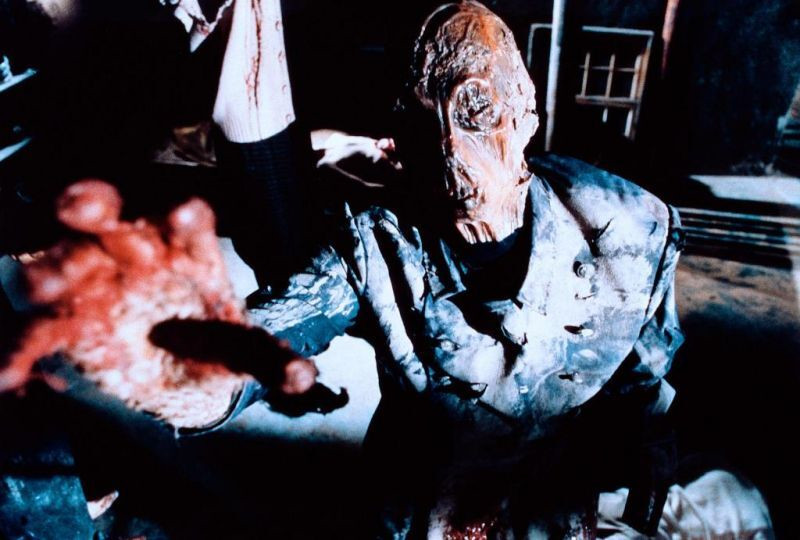
Except it’s home to a Dr. Freudstein, a 19th century surgeon who has kept himself alive for 150 years by harvesting the body parts of anyone who wanders downstairs. Well, with a name like that he was never going to become a GP, was he?
This is the third and final movie in Fulci’s unofficial “Gates of Hell” trilogy, after City of the Living Dead and The Beyond, and it’s the most traditional of the three. It’s a proper haunted house story with a proper monster. Oddly enough, that makes it the easiest Fulci for a beginner, provided the beginner is fine with throats being cut by an oozing, maggot-stuffed corpse wearing a lab coat.
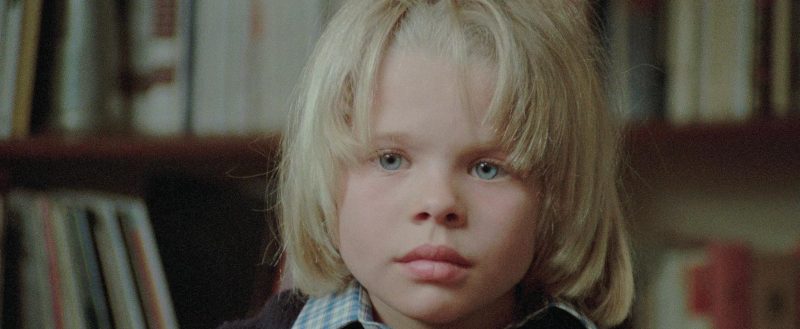
I have to talk about Bob for a moment. He is played by Giovanni Frezza, a perfectly nice-looking Italian kid, but the English dubbing gave him a voice that sounds like a forty-year-old man doing an impression of a seagull. Every time he yells “Mommy!” you feel your back teeth grinding together. Bob seems to be a lot of people’s least favorite character in horror history, and he’s in nearly every scene, which is a great act of sadism by the movie, and that includes the moment when someone is stabbed through the back of the head.
Around Bob though, Fulci builds some great set pieces. There’s a bat attack that goes on for so long it becomes almost slapstick, with Norman stabbing an angry rubber bat to death while it gushes blood all over his hand. There’s a babysitter called Ann, who mops up a huge pool of blood from the kitchen floor without anyone ever asking whose it is. There’s a ghostly little girl, Mae, who keeps warning Bob not to come to the house and who is clearly the only person in the movie with any sense. Fabio Frizzi’s score is a mournful, plinking thing that sounds a little like a music box played at a funeral.
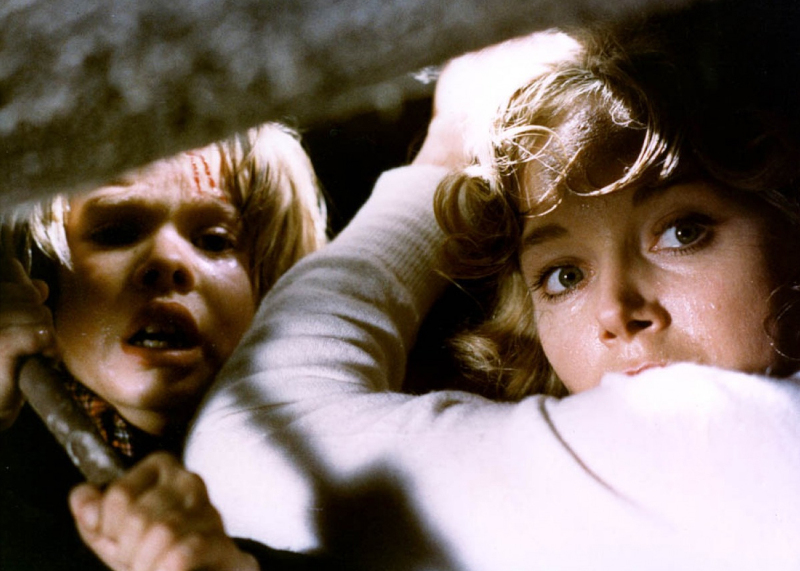
The movie opens with an epigraph attributed to Henry James, about not knowing whether children are monsters or monsters are children. It looked a little off to me, so digging into it, I see that Henry James never wrote it. Lucio Fulci basically invented a quote and stuck a famous name on it. It’s the most Fulci thing imaginable.
The House by the Cemetery doesn’t make a jot of sense in places. The timeline folds in on itself, the ending is wonderfully nuts, and the whole thing has the logic of a dream you have after eating cheese at 2am. That’s why it’s here. It’s spooky, autumnal and gory. Perfect October viewing and only Bob stops it from climbing higher in my ranking.
Where to stream The House by the Cemetery (1981):








3. Don’t Torture a Duckling (1972)
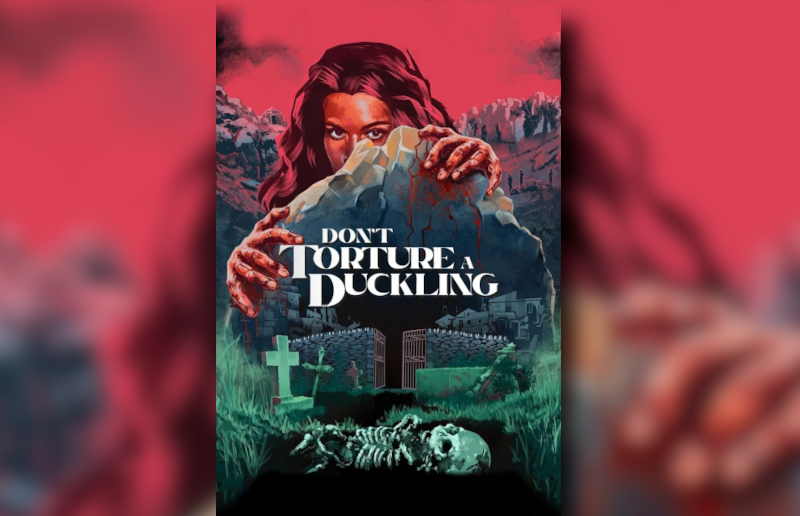
If you only know Lucio Fulci for eyeballs and zombies, Don’t Torture a Duckling will absolutely knock you sideways. It’s the angriest movie he ever made, and possibly his best.
First things first: The title. No ducks are tortured. The Italian original, Non si sevizia un paperino, refers to Paperino, the Italian name for Donald Duck, and a decapitated Donald Duck toy turns up as a key clue. It’s less “animal cruelty” and more “cartoon character crime scene.” Don’t show this to anyone expecting a farmyard movie.
Someone is murdering young boys in Accendura, a sun-drenched village in the south of Italy, with the new motorway cutting across the hills like a scar and modernity hasn’t so much arrived as driven past without stopping. Tomas Milian plays a journalist from the city who rolls in to cover the case, and Barbara Bouchet plays a rich, bored young woman hiding out in the village after a drugs scandal. Everyone in town has a suspect in mind, and none of them is the right one.
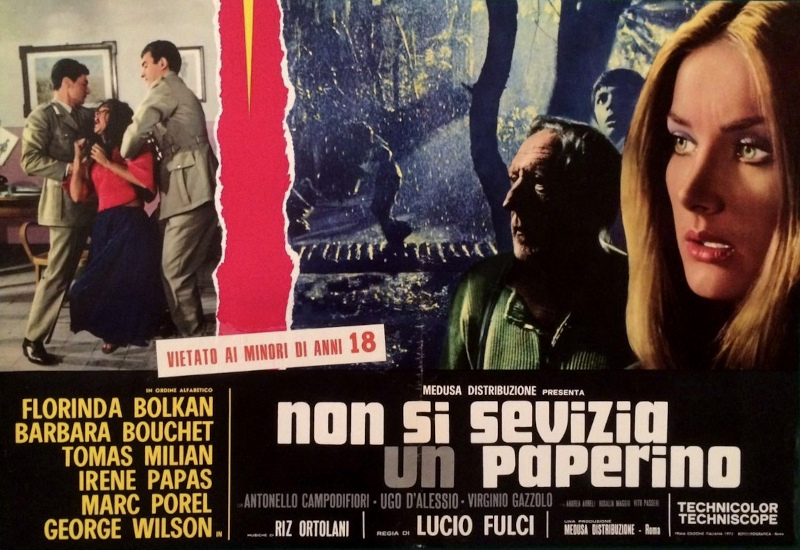
I think what makes Don’t Torture a Duckling extraordinary is that the horror isn’t really the killer, it’s the village. Fulci aims his camera straight at superstition, mob justice, and the Catholic Church and he doesn’t miss. The locals’ first target is Maciara, a local woman who practices folk magic, played by Florinda Bolkan (yep, her again, a long way from swinging London). When she’s released by the police, a gang of men corner her in the cemetery and beat her to death with chains.
This is one of the most upsetting scenes in Italian cinema, and Lucio Fulci stages it with a sort of cruel genius. Over the top, and instead of screams and thunder, he plays a soft, wistful pop ballad sung by Ornella Vanoni, while cars on the motorway roll past oblivious. It’s the kind of scene you think about on the bus home for a week. I’m not joking about this one, it’s grim and it’s brilliant.
The Church comes off even worse. Without spoiling too much, let’s just say the vestments aren’t a guarantee of good behavior, and the finale involves a cliff, a struggle, and a fall that ends with a face meeting rocks in a series of cuts that look like a shop dummy being thrown off a quarry. It’s the one obviously cheap effect of the movie, and it seems to make the scene funnier and nastier at the same time. Irene Papas turns up and is magnificent, because Irene Papas was always magnificent.
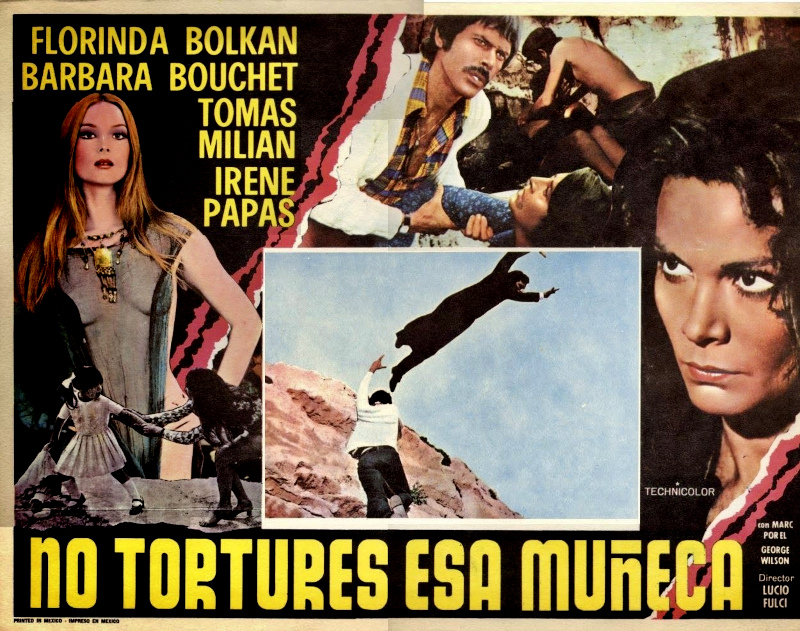
Lucio Fulci claimed Don’t Torture a Duckling got him into trouble with the Church and that it hurt his career for years afterwards. Whether that’s completely true or just Fulci telling a good story (he did love a good story), you can see why the film rattled people.
It’s a movie about how communities protect power and punish the vulnerable dressed up as a whodunit. It’s the one to show your friend who thinks Italian horror is all bad dubbing and fake blood. And, yeah, it’s still both of those things. It’s also a masterpiece.
Where to stream Don’t Torture a Duckling (1972):





2. The Beyond (1981)
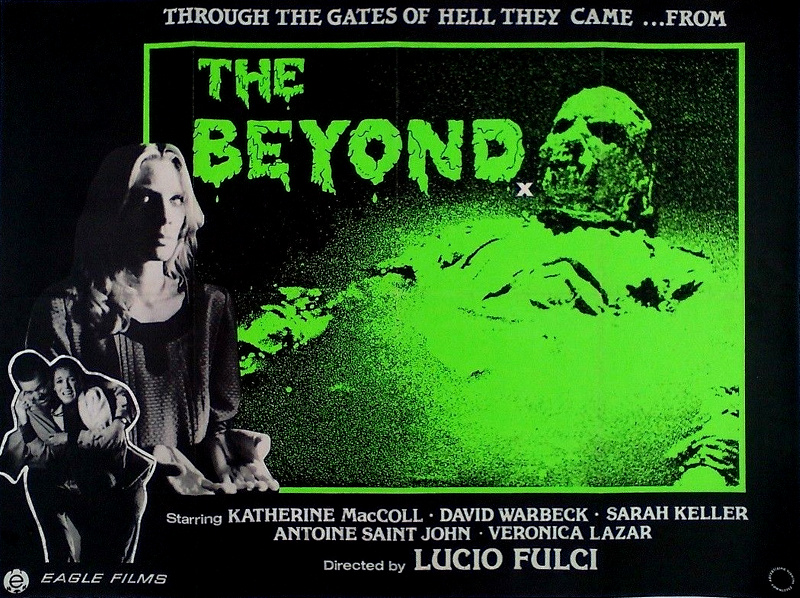
Here’s a top tip for anyone inheriting a creepy old hotel in Louisiana: before you renovate, check whether it’s built over one of the seven gates of Hell. It’s the sort of thing that won’t really come up in the survey.
The Beyond (or to give it its brilliantly overcooked Italian title, …E tu vivrai nel terrore! L’aldilà, which is roughly “And You Will Live in Terror! The Beyond”) opens in 1927, as a lynch mob drags a painter called Schweick down to the hotel basement, whips him with chains, nails him to the wall, and throws quicklime in his face. Then the credits start. Lucio Fulci isn’t one for small talk.
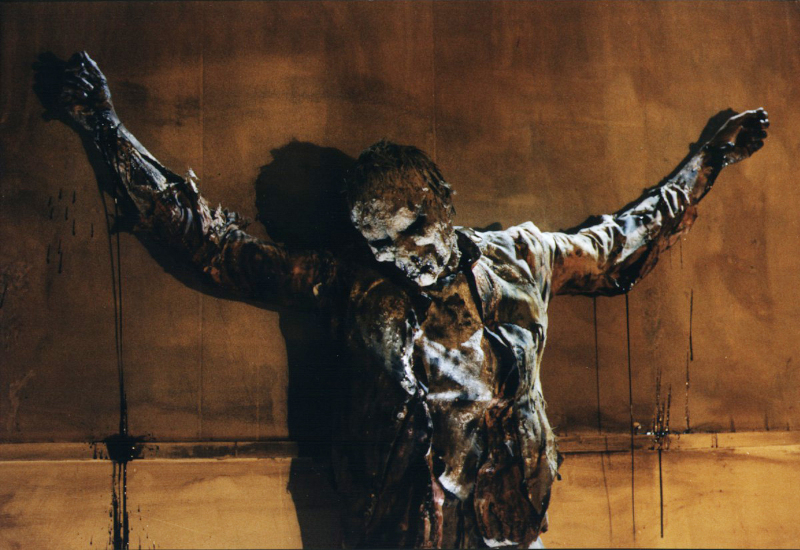
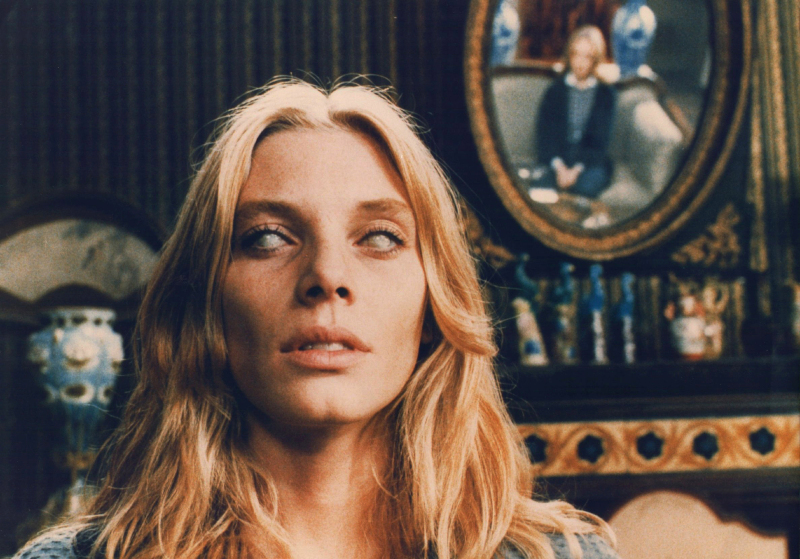
Cut to the 1980s. Liza, Catriona MacColl again, the Final Girl of the Fulci-verse, inherits the hotel and decides to do it up. Almost immediately, things start to go wrong. A painter falls off a scaffolding. A plumber called Joe goes into the flooded basement and gets his eye squished out by a hand from the wall. Liza meets Emily, a blind woman with pale, milky eyes who stands in the middle of an empty highway with her dog, Dickie, and speaks in riddles. David Warbeck turns up as a local doctor, McCabe, whose main medical skill appears to be shooting things in the head.
And that’s about as much plot as The Beyond is willing to give you. This is Lucio Fulci at his most totally unbothered by narrative. Things happens because they look incredible. Rooms change, people appear and vanish. A book called the Book of Eibon is mentioned with great seriousness and then pretty much forgotten. Trying to follow the logic is like trying to follow a cat around a dark house: it’s possible, but you’ll end up somewhere strange and slightly damp.
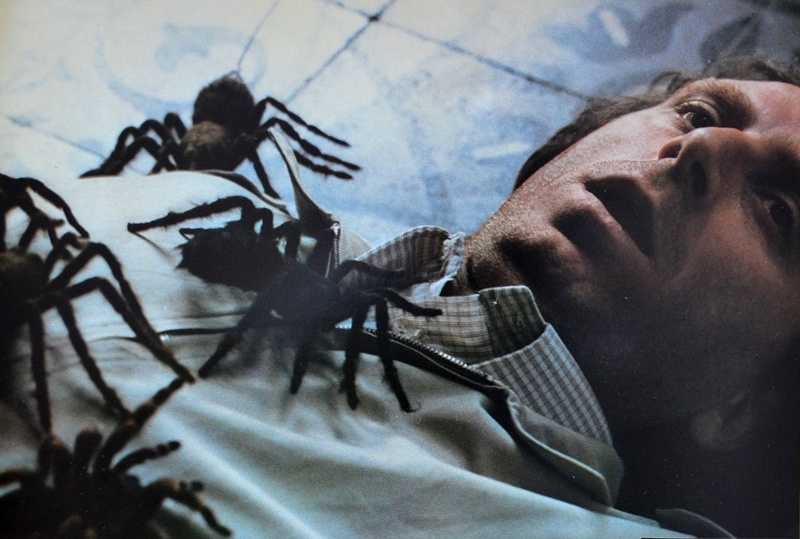
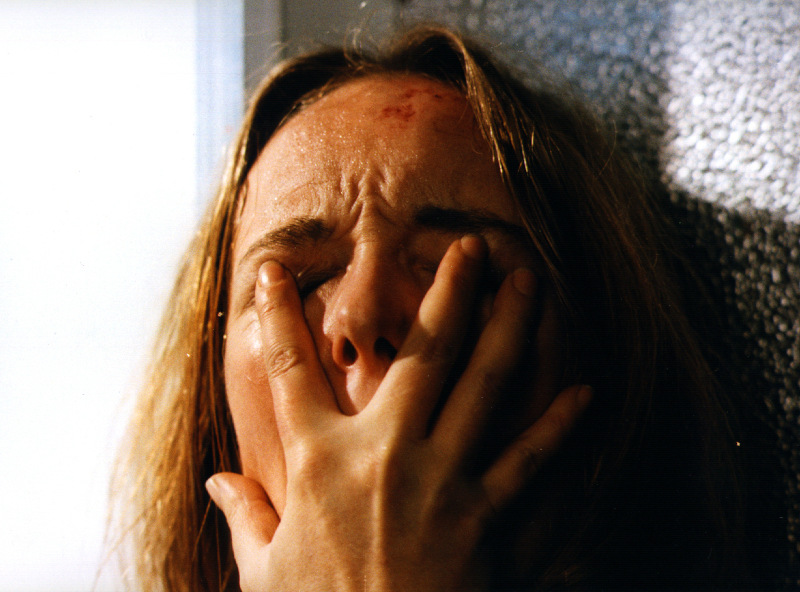
What The Beyond does have is a run of set pieces that are legendary for good reason. A man paralysed on a library floor has his face eaten by tarantulas, which rip off his lips and tongue with the enthusiasm of kids at a buffet. Never mind that the tarantulas are a mix of real spiders and pretty obvious mechanical ones making a noise like a squeaky door. It’s still pretty horrible. A woman has acid splashed on her face in a morgue, and it bubbles away into foam, and then a lake of the gunk slowly creeps across the floor towards a child. Dickie the dog, the movie’s most loyal character for about an hour, suddenly turns on his blind owner and rips her throat out. Nobody is safe in a Fulci movie. Not even the Alsatian.
The finale is where The Beyond really earns its stripes. Escaping a hospital overrun by the dead, Liza and McCabe run down a set of stairs and find themselves, impossibly, back in the hotel basement, and then in Schweick’s painting: a grey, endless plain covered in bodies, under a dead sky. They turn, they look, and their eyes go blank. There’s no explanation and there’s no escape. It’s one of the most haunting endings in horror and it really lands because Fulci has spent the past eighty-five minutes refusing to play by the rules.
The Beyond had a rocky ride in the English-speaking world, released in cut versions under titles like Seven Doors of Death, before Grindhouse Releasing and Quentin Tarantino’s distribution label Rolling Thunder gave it a proper theatrical re-release in 1998. These days, it’s rightly treated as Fulci’s masterpiece of surrealist horror, a movie that’s less a story than a nightmare somebody managed to commit to celluloid. Fabio Frizzi’s prog-gothic score really helps, making every daft moment (there’s more than one) feel weirdly sacred.
Is The Beyond the best Lucio Fulci movie? Plenty of fans will say yes, and they really do have a point. But there’s ONE Fulci movie that’s even more iconic, even more absurd, and it has a zombie wrestling a shark…
Where to stream The Beyond (1981):

1. Zombi 2 (1979)
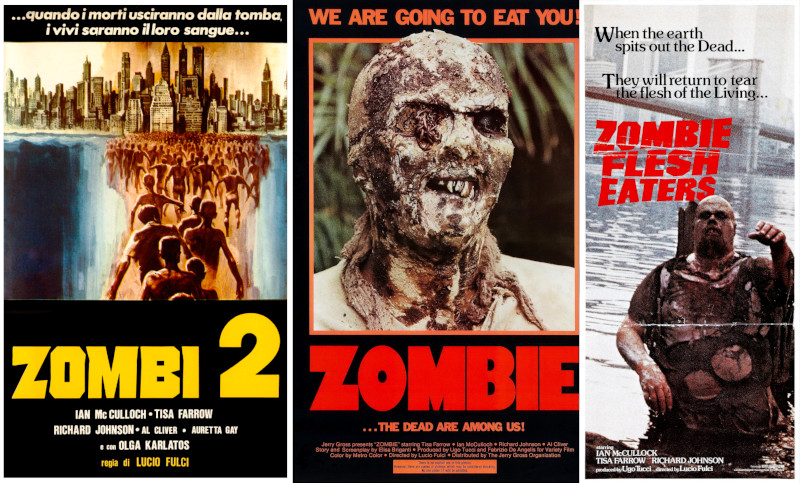
Ah, yes, here we are. The big one. The movie where a zombie fights a shark. Underwater. For real. If you’ve ever wondered what cinema is for, this is the answer.
Okay, a fast history lesson, as the title is a great bit of opportunism. In 1978, George Romero’s Dawn of the Dead was released in Italy as Zombi, in a cut supervised by Dario Argento, and was a big hit. Italian producers did what they did best in the 1970s: spotted a successful movie and made an unofficial sequel to it as fast as possible. Dardano Sacchetti’s script about a Caribbean island where the dead are rising had nothing to do with Romero’s movie. It just got called Zombi 2. In the U.S it became Zombie, and here in the UK it became Zombie Flesh Eaters, a name that tells you everything, but also nothing.
Zombi 2 opens with an abandoned boat drifting into New York Harbor. Two harbor patrolmen climb aboard and one of them is promptly munched by a large, bloated zombie. The boat belongs to the father of Anne Bowles, played by Tisa Farrow, who teams up with journalist Peter West, to find him. The trail leads to the island of Matool, where Dr. Menard, played by Richard Johnson, is sweating, drinking, and doing his best to work out why his patients keep dying and getting up again. He’s not having the best week.
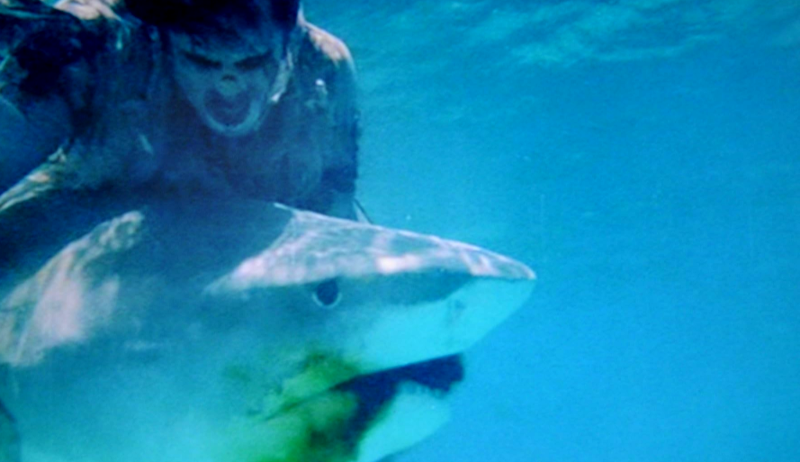
Now, the shark. Halfway to Matool, a diver called Susan, played by Auretta Gay, goes for a swim (in nothing but a teeny thong because it’s a horror movie) to take some underwater photos with her camera. She’s menaced by a shark, then by a zombie lurching along the seabed, and then the zombie and the shark get into a fight. It’s not a special effect. It’s a real tiger shark and a real man in zombie make-up, a professional underwater stuntman and shark handler, wrestling on the sea floor. The zombie bites the shark. The shark bites the zombie. Nobody wins, especially not Health and Safety. It has absolutely nothing to do with the plot. It might be the single most magnificent thing in Italian horror.
Then there’s the eye. Menard’s wife, played by Olga Karlatos, is grabbed by a zombie through a door, and her head is very slowly pulled towards a jagged splinter of wood. The camera holds. The splinter gets closer. You start bargaining with the movie not to show it. The splinter goes in. Lucio Fulci would return to eye trauma over and over, but this is the moment he made it his signature. It’s patient, with no mercy and almost unbearable in its slowness.
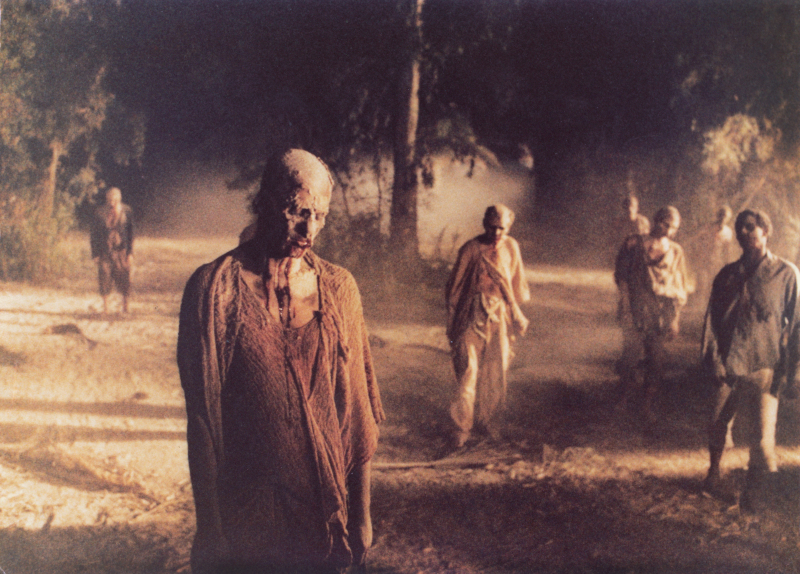
The movie is also, I think, the definitive Italian zombie movie. Romero’s dead were a satire on consumerism. Fulci’s dead are something older and grimmer; they’re rotting, crusted with mud and worms, shambling out of ancient graves. In one of the best shots, a conquistador zombie rises from the earth, its eye sockets crawling with worms, and claws its way into Susan’s face. Gianetto De Rossi’s make-up effects look like they were made using clay, porridge, and spite. These things look dead. You can almost smell them through the screen.
Fabio Frizzi’s synth score, a low and pulsing drone, sounds like something trying to get out of a crypt. Sergio Salvati’s camera work makes the island look beautiful, sunbaked, and totally diseased. Plus the ending is a killer (ha!) as back in New York the radio announces that the dead are rising, and the final shot shows zombies shuffling across the Brooklyn Bridge into the city while the traffic keeps rolling. Apocalypse, Fulci-style. No fuss or explanation, just the end of the world shambling into Manhattan at rush hour.
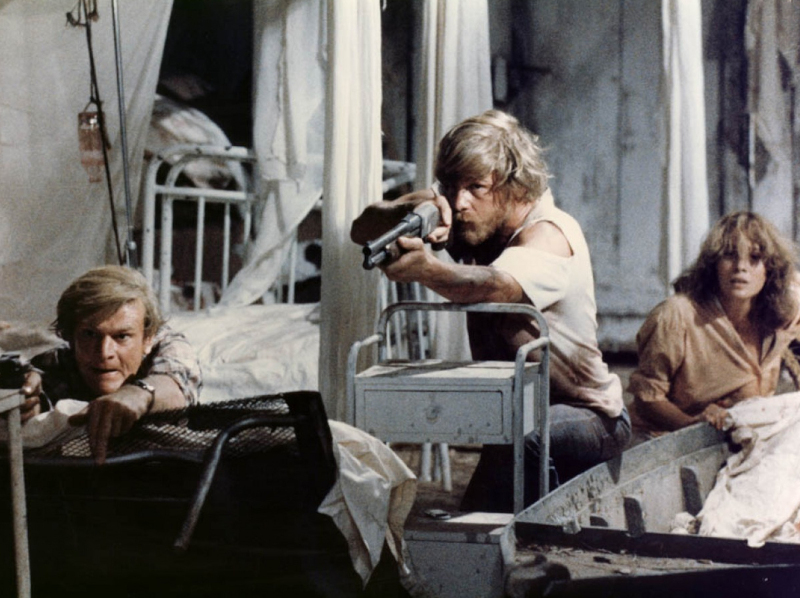
In the UK, Zombie Flesh Eaters ended up on the “video nasties” list, which of course made it the most sought-after VHS in every school playground in the country. Banned, cut, recut, and re-released over the years, and it’s now available uncut, and you can watch it in pristine high definition, which seems like a lot of resolution for a man fighting a shark. But there it is.
Is Zombi 2 the most artful movie on this list? Of course not. The Beyond is stranger, Don’t Torture a Duckling is smarter, Lizard in a Woman’s Skin is prettier. But Zombie 2 is the movie that made Lucio Fulci who he is. It’s where he found his voice, and that voice was mainly the sound of someone chewing. It’s the one everyone remembers, that launched a thousand imitators, and always turns up in conversations about European horror. Plus, it has a zombie fighting a shark. Case closed.
Where to stream Zombi 2 AKA Zombie AKA Zombie Flesh Eaters (1979):


Remembering Lucio Fulci, the Godfather of Gore (June 17, 1927-Mar. 13, 1996)
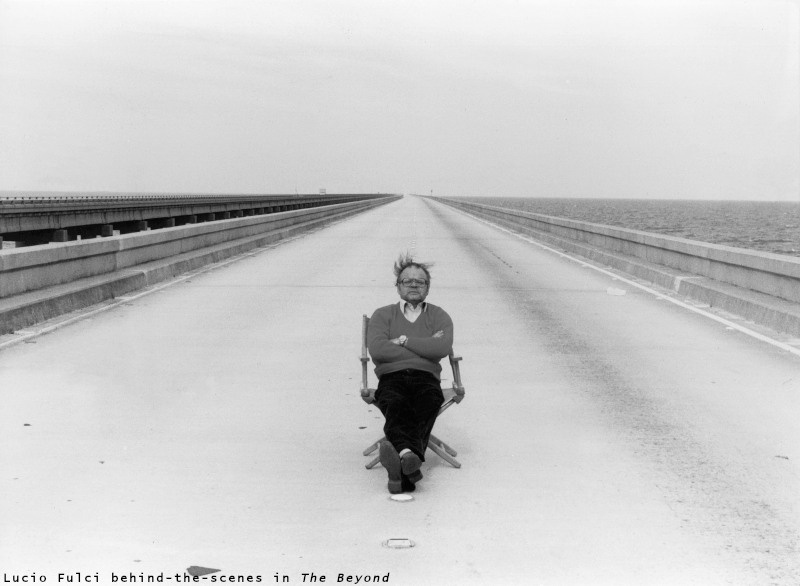
Five films may be a cruel number to focus on for a director this prolific, but I wanted the room to really dig into them. But, a quick nod to the ones knocking on the cellar door…
- City of the Living Dead in 1980 opened the “Gates of Hell” trilogy and features a woman vomiting up her own intestines, and even that sentence should come with a warning label.
- The New York Ripper in 1982 is so nasty and mean-spirited that even hardened fans need a lie down afterwards, and it has a killer who quacks like a duck (Lucio Fulci and ducks… possibly an essay idea?).
- The Psychic in 1977 is an elegant and underrated giallo starring Jennifer O’Neill that deserves more love than it gets.
Lucio Fulci died in 1996, never quite getting the respect he deserved when he was alive. He was dismissed as a gore merchant and… fair enough; he did merchant an awful lot of gore. But spend an evening or two with these five films and you’ll see something more:
He was a director with a painter’s eye, a satirist’s rage, a comedian’s timing, and a total unshakable belief that if a scene is worth doing, it’s worth doing for another thirty seconds while the audience begs for mercy.
So, turn off the light, brace yourself, and keep a close eye on the splinters. Just not too close. And if a blind woman with a dog tells you not to go into the hotel, you listen to her.
*This article was written by Adam Page.*

Images for this post were purchased at MovieStillsDB and CineMaterial.