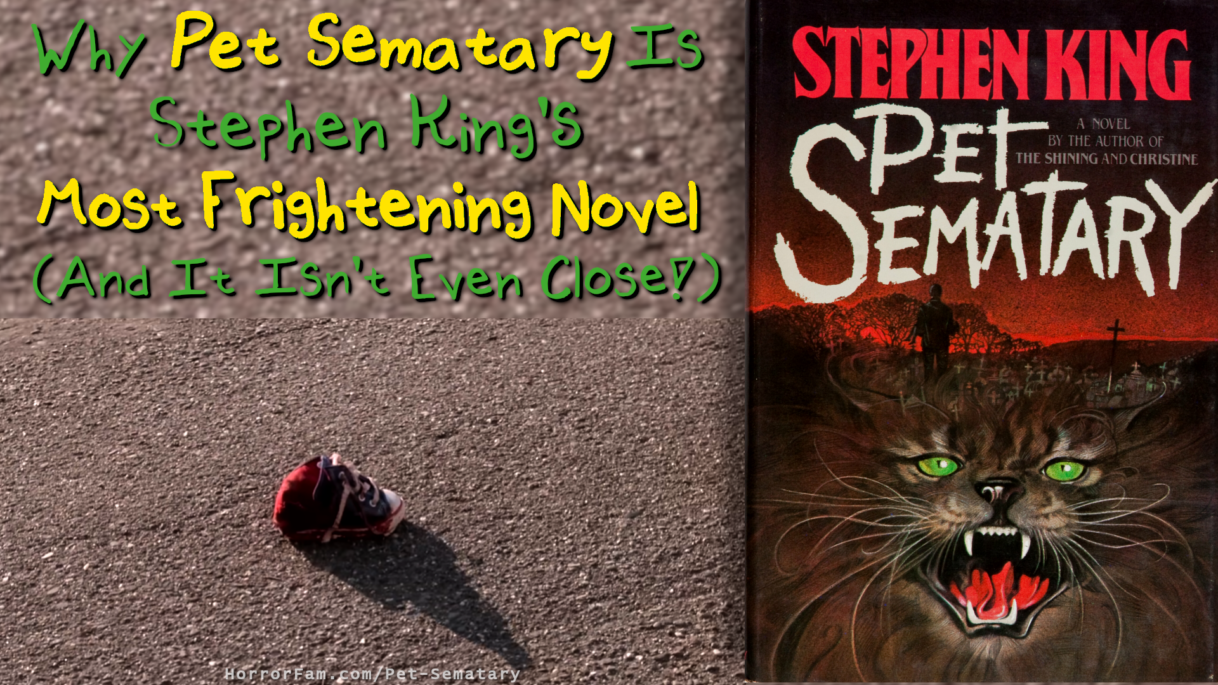
Okay, I’m going to settle the “what’s Stephen King’s most frightening novel” debate once and for all, so buckle up.
Stephen King has written a truly staggering number of books and stories. He’s given us killer clowns, possessed cars, murderous prom queens, and that rabid St. Bernard that probably put dog ownership back ten years. He’s a beautiful and horror-obsessed writing machine!
When I say Pet Sematary is Stephen King’s scariest novel, I know I’m saying a lot. I’m saying it’s scarier than The Shining, which gave a whole generation a fear of elevators and topiary animals. Scarier than IT, which declared open season on clowns pretty much forever. Even scarier than Misery, which made every author quietly reconsider their relationship with their fanbase.
And yep, I’m saying exactly that.
King himself is on record as saying Pet Sematary is the book that scared HIM the most; the one which made him wonder if he’d gone too far. He wrote, then shelved it, only publishing it because he owed his publisher a novel under a contract he was trying to get out of. So, the world only got Pet Sematary by accident. And it is absolutely, no question, the most terrifying thing he’s ever put his name on.
Here are five reasons why…
This post contains affiliate links. If you watch a movie or purchase a book we’ve recommended using our links, you’ll be helping to support HorrorFam.com at no additional cost to you!
5. It Weaponizes the Most Universal Fear.
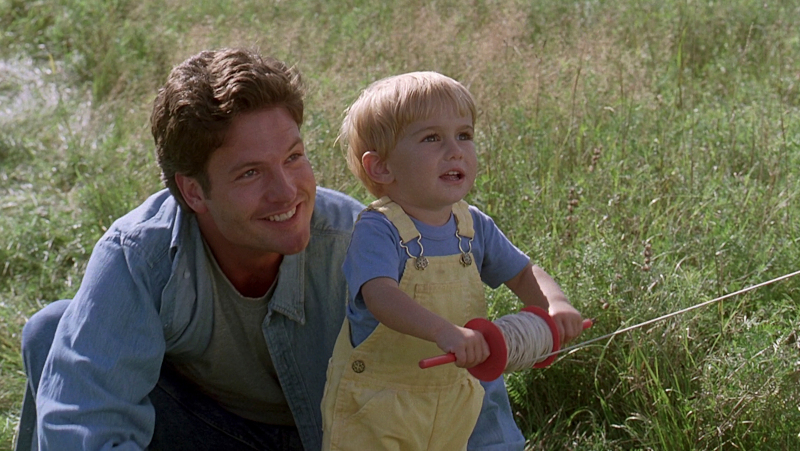
Before we get to the burial grounds and reanimated corpses, let’s talk about what, at its core, Pet Sematary is really about: the death of a child.
More specifically, the death of your child.
King has always been great at identifying those fears living rent-free in the backs of our minds. The ones we don’t talk about sitting around the dinner table as they’re just too raw. With Pet Sematary, he goes after something so primal and gut-wrenching, so universally dreadful, that it hardly needs any supernatural scaffolding to be horrific.
The death of a child is arguably the worst thing that can happen to a person, as it violates the natural order. When you lose a child, something fundamental breaks in you which never quite heals.
Stephen King knows this, and he doesn’t politely gesture at it from a distance. He walks you right up to the edge and makes you stare directly into it. Then he gives you a little push.

By the time two-year-old Gage Creed runs into the road in front of a truck, King has spent enough time with the family (Louis, Rachel, Ellie and Gage) that it no longer feels like fiction. It feels more like you’re being told about something that happened to someone you know. The horror is visceral and nauseating, almost physical. And there’s a brutal genius in it: the moment with the truck, the road, and the screaming… That’s not even the scary part! It’s almost the relief, because what comes next is so much worse.
Other Stephen King novels scare you with the unknown, with monsters. Pet Sematary scares you with something you already completely understand. Loss and grief, the terrible consuming love of a parent. That’s an entirely different kind of horror, and hits us on a level a shapeshifting clown just can’t reach.
4. The Supernatural Here Feels Truly Ancient and Indifferent.
Something that separates Pet Sematary from a lot of King’s other works is the nature of the evil at its heart.
In The Shining, the Overlook is hungry and manipulative. In IT, Pennywise is theatrical and nearly playful in its cruelty. Even the vampires in Salem’s Lot have a bit of gothic grandeur to them. These are active evils that want things. They reach out, and scheme.
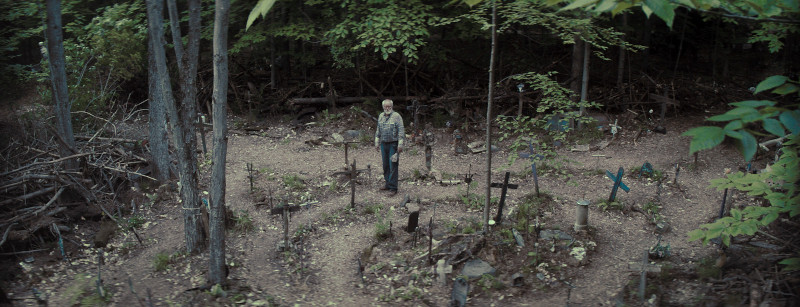
The Micmac burial ground doesn’t do any of that; it just exists.
It sits up there in the woods, beyond the deadfall, patient, silent, and totally indifferent to the people it destroys. It doesn’t tempt people in with offers of power. It doesn’t have to! Grief does all the heavy lifting for it. The burial ground just waits, knowing that eventually someone will come along with enough love and enough loss to make an incredibly bad decision. It then corrupts that love into something monstrous, and waits again.
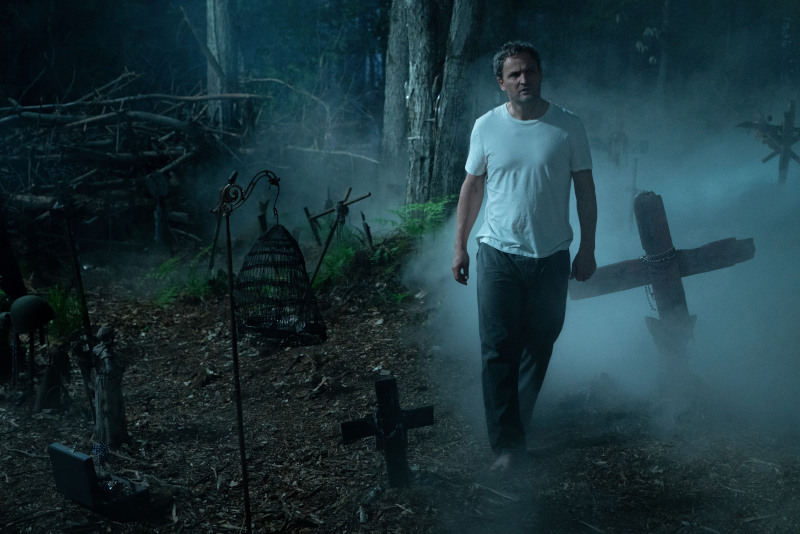
There’s something seriously unsettling about evil that doesn’t care about you. We’re all used to antagonists, even supernatural ones, being invested in our destruction. They hate us, or want to hurt us, but they have reasons. The Wendigo haunting that burial ground has no reasons. It doesn’t hate Louis Creed, it doesn’t even notice him, really. He’s just another grieving fool who stumbles into its orbit.
That cosmic indifference is truly chilling in a way that malevolence usually isn’t. Because if something hates you, at least it’s paying attention. The burial ground will destroy you just as easily as it would ignore you. You’re completely and utterly irrelevant to the dark force which is animating that soil, and that’s a special kind of cold.
3. Louis Creed Makes a Choice You (Almost) Understand.

This is where Pet Sematary does something that the majority of horror novels don’t bother attempting: it makes the horror reasonable.
Louis Creed isn’t a stupid man; he isn’t unstable or reckless, or oblivious to the clear warning signs building up around him. He’s a doctor, rational and clear-eyed. Along with Jud Crandall, he buried his daughter’s cat in that ground and saw what came back, so he knows the score. He has every piece of information needed to make the right call.
And he still does it.
He buries Gage in the Micmac ground because the alternative, the real alternative, is living without his son. And Stephen King writes Louis’s grief so authentically and devastatingly that you do more than understand the decision, you feel its pull yourself. You sit there reading, knowing full well it’s going to end catastrophically, and a small part of your mind is nodding along saying, “Of course he does it, what else could he do?”
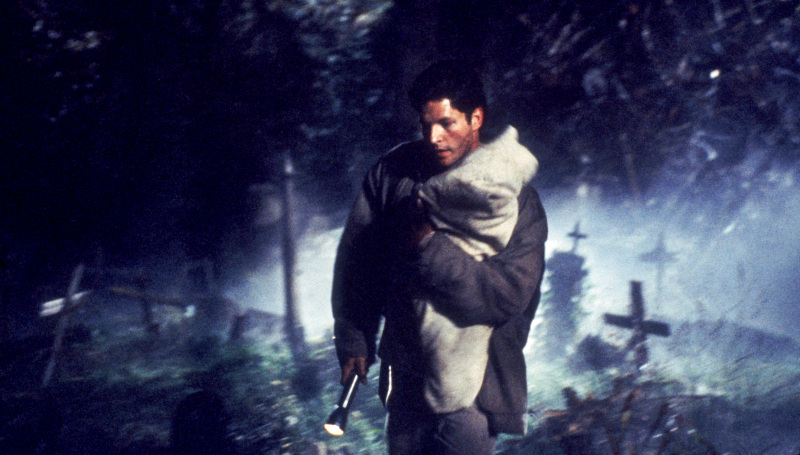
That’s incredibly difficult to pull off in fiction. It needs the reader to be emotionally compromised to the point their own rational judgement is temporarily suspended. King manages this so smoothly that we almost don’t notice it happening.
Compare this to, let’s say, a horror movie character who goes into the obviously haunted basement, alone, at midnight. You roll our eyes a little at that. But Louis Creed walking into the woods carrying the body of his dead son? You get it. You may hate it, but you get it anyway.
That complicity, that feeling that you might have done the same thing, is what makes Pet Sematary linger. A lot of horror novels scare you while you’re reading them, but this one follows you home.
2. King Takes His Time, and Lets the Dread Build.
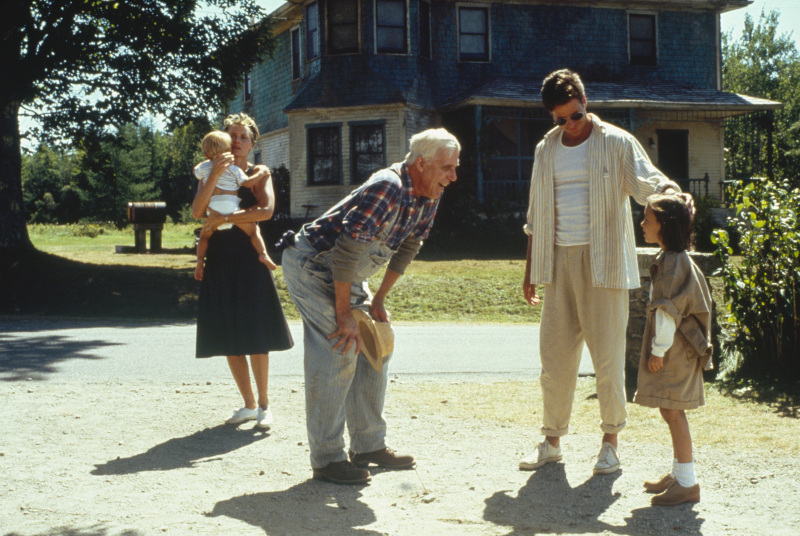
Something a lot of people don’t give Pet Sematary credit for is how slow it is.
I don’t mean Pet Sematary is boring, it’s never that, but it’s deliberately and patiently slow in the same way a rising tide is slow. You know it’s coming, and can see it coming, and you cannot do a single thing to stop it.
The novel spends a massive amount of time just letting you live with the Creeds. We follow them settling into Ludlow, Maine. We meet the neighbors, learn the rhythms of their days, watch Louis navigate his new job at the university health center, and see Rachel try and deal with the death anxieties she’s carried since childhood. We see Ellie love Church, the family cat, and watch Gage be just the kind of delightfully crazy toddler that makes anyone who even met a toddler laugh in recognition.
Stephen King is building attachment. He knows it, and you probably know it too if you’ve read enough of his work. But of course, knowing that doesn’t protect you. You get attached anyway; and these people have become real by the time King starts his slow and systematic destruction of all they have, and it really is painful to read.
That pacing also gives the supernatural elements room to breathe. When Louis sees the burial ground for the first time, the real one beyond the ‘pet sematary,’ it’s more eerie rather than explicitly frightening. When Victor Pascow’s ghost arrives to warn Louis, it’s more deeply unsettling than out-and-out scary. The dread comes in layers, building pressure like a storm system taking all week to arrive, then ripping the roof off when it does.
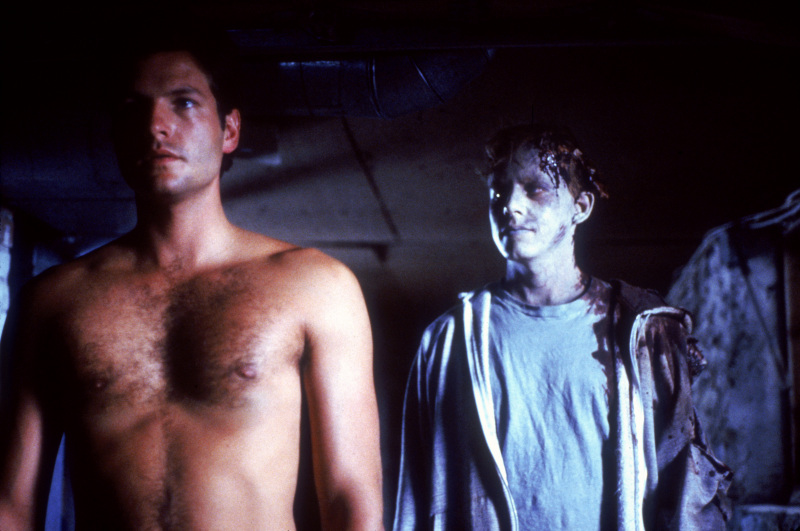
By the time Gage runs into that road, King has been preparing you for hundreds of pages. You’ve been dreading it without really knowing you were. When it happens, even if you’ve read it before, it’s always the same: it feels like a punch to the gut every time.
That is craft. It’s a writer knowing exactly what he’s doing, and executing it brilliantly.
1. Pet Sematary’s Ending is the Bleakest Thing King Has Ever Written.

Now to talk about the ending. Technically this is a Spoiler Warning, although really, if you’ve come this far you probably already know how it goes…
A lot of horror novels, even great ones, will give you something at the end. Maybe not a happy ending, but something. A glimmer, or a survival. A sense that the darkness has been pushed back, if not defeated. The characters have suffered, but they’ve learned something. The evil has been contained, or the morning has come.
Pet Sematary gives you nothing.
Louis buries Rachel in the Micmac ground after she’s murdered by the returned Gage. He knows what’s going to happen; he knows she’ll come back wrong, the same way Church and Gage came back wrong. He knows and does it anyway, because he’s so far gone by this point that there’s no Louis left to make rational decisions. There’s only grief wearing Louis’s face.
Rachel comes back.
And the book ends with her hand on Louis’s shoulder, and the single word: “Darling.”
That’s it, that’s where Stephen King leaves us.
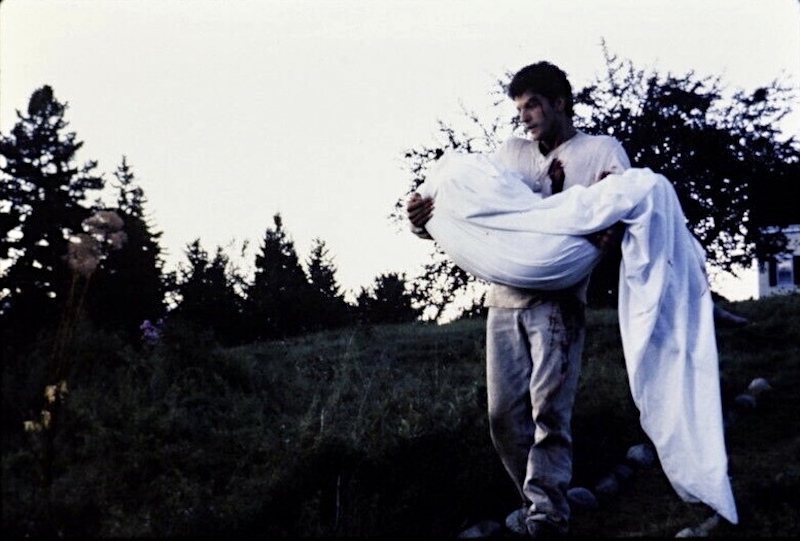
There’s no rescue, or final confrontation that Louis somehow wins. There’s no intervention or dawn breaking over the wreckage to signal the worst is over. There’s just a dead woman standing in the kitchen, with whatever she’s about to do next, and the utter certainty that it’s going to be awful.
It’s one of the most devastating endings in horror literature. Not because it’s shocking or gory, but because it’s so hopeless. There’s no version of what comes after that “Darling” that’s okay. Louis is not going to be okay. That thing wearing Rachel’s face is not Rachel. We don’t get to see what happens next and we don’t need to. We already know, and it’s much worse than anything King could explicitly write.
Stephen King once said that the job of the writer is to make the reader’s worst imagination do the work. Pet Sematary’s ending is a masterclass in that principle.
A final word on why Pet Sematary hits so differently…
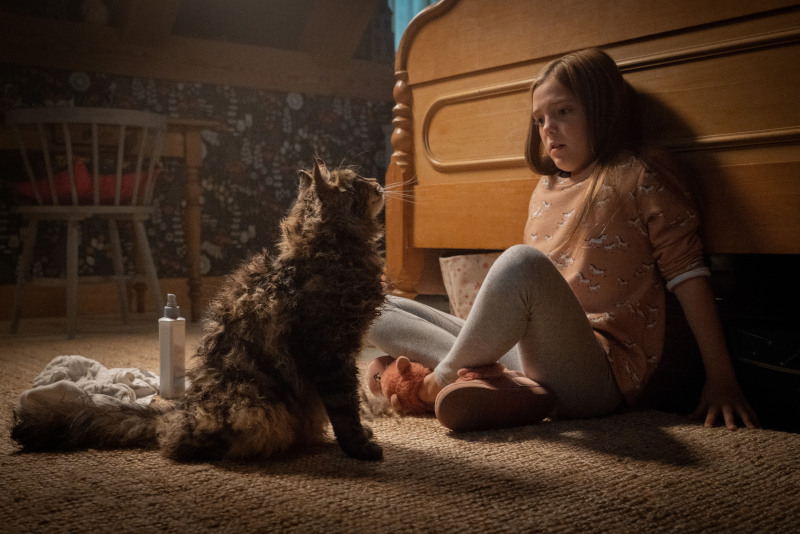
The Shining is a masterpiece. IT is an incredible achievement. Misery is a tight and brilliant thriller. I’m not trying to throw any of Stephen King’s books under the bus.
But there’s something so different about what Pet Sematary does.
Most horror, even the best of it, works in a space that’s at least a little removed from our everyday reality. It creates distance. We enjoy the fear because we know that we personally aren’t at risk from a shapeshifting creature living in a sewer and eating children every 27 years. It’s that distance which is part of the pleasure of horror as a genre.
Pet Sematary removes that distance almost completely.
Yeah, there’s a Wendigo and supernatural burial ground. But pull those away and what you have is a story about a family moving into a new house on a dangerous road, with tragedy following. That much – the road and truck, the grief – needs no supernatural explanation at all. It’s the most ordinary horror imaginable. The Micmac ground feels like an afterthought, with the road as the monster the whole time.
That’s why Pet Sematary stays with people in a way other Stephen King novels sometimes don’t. You close The Shining and think, well, I’m not going to be a caretaker in a haunted hotel so I’m fine. You can’t close Pet Sematary and find that comfort as dangerous roads are everywhere. So is grief. The terrible and irrational things grief makes people do? They’re everywhere, too.
King wrote a novel about how loss and love can drive a person to the edge of reason, dressed it in supernatural horror’s clothes, and managed to create something more frightening than grief or horror alone. That’s why it’s The One.
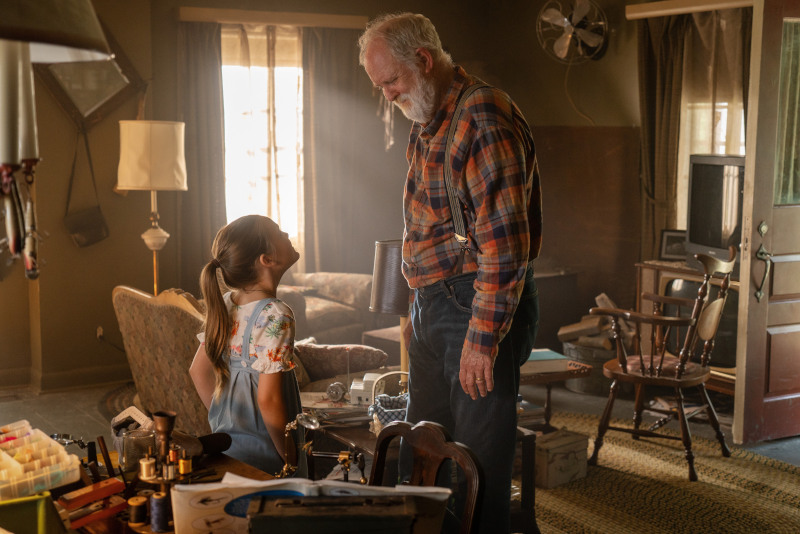
Pet Sematary is Stephen King’s most frightening novel because it earns its horror in a way very few novels in the genre manage to do. It doesn’t rely on scary monsters; it makes you be the monster (emotionally at least). It takes the thing you love most, breaks it, then asks if you wouldn’t have done the same as Louis. And you aren’t totally sure you wouldn’t have!
King was right to be frightened of what he’d written, and he was right to publish it. Truly great horror isn’t supposed to make you feel safe, it’s supposed to find the real thing, that fear beneath the fear, and press on it until you can’t look away.
This novel understands love and grief and human fallibility at a level most fiction won’t even attempt, and uses that understanding to take us apart.
No other King book comes close.
***This article was written by Adam Page***
Read Stephen King’s Most Frightening Novel: Pet Sematary (1983)!
Watch the Pet Sematary Film Adaptations
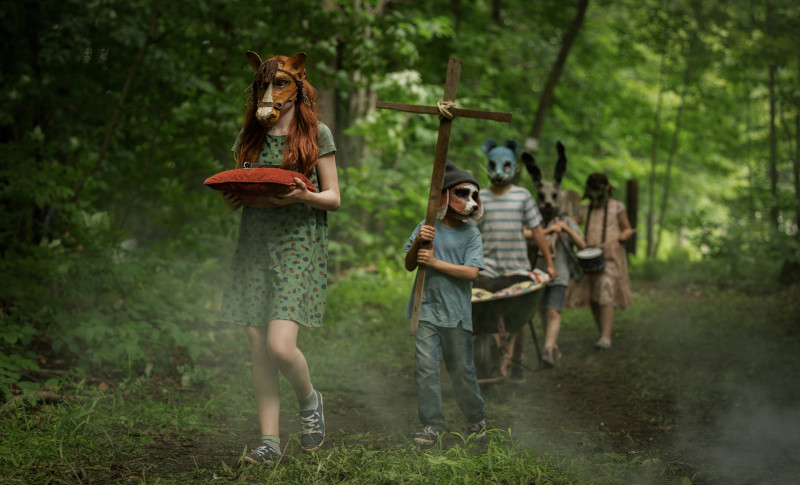
Editor’s Note: Adam Page’s review was about the original Pet Sematary novel; however, I used stills from both the 1989 and the 2019 film adaptations for the visuals to accompany his writing. Since I did that, I thought you might be curious about the film versions, so I’ll include them below. I also circled back with Adam to get his thoughts on each of them! And while he HIGHLY encourages you to read the novel, he had this to say about the movies:
“I think on balance I prefer the 1989 version. It’s definitely a product of its time (very ’80s) but it’s a little closer to the book than the 2019 one. 2019’s is more of a ‘traditional’ horror, with the line of kids wearing animal masks, Ellie killed instead of Gage, then the whole family being resurrected as basically a zombie family. It wasn’t the best in my opinion.
The 1989 one had that odd feeling of fear and dread through it and the ending is closer to the seriously hopeless ending of the book.
I think that like a lot of King’s work, the movies can never really capture the horror as so much of it is in the description, and characters’ thoughts.
The 2019 one isn’t without its charms but I’d stick with the original film adaptation. It has that great song from The Ramones and that’s always a good thing 😁”

Where Pet Sematary (1989) is streaming now:








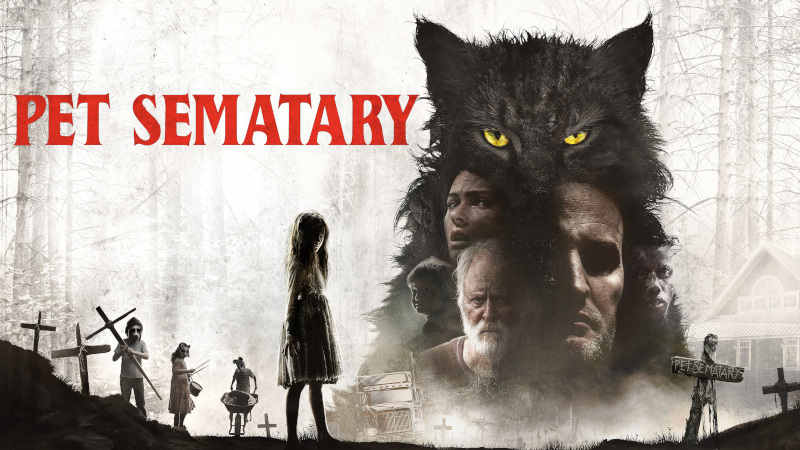
Where Pet Sematary (2019) is streaming now:



Movie posters for this article were purchased on CineMaterial. Movie stills were purchased on MovieStills DB. The Pet Sematary (1983) novel cover on the featured image is from Wikimedia Commons.