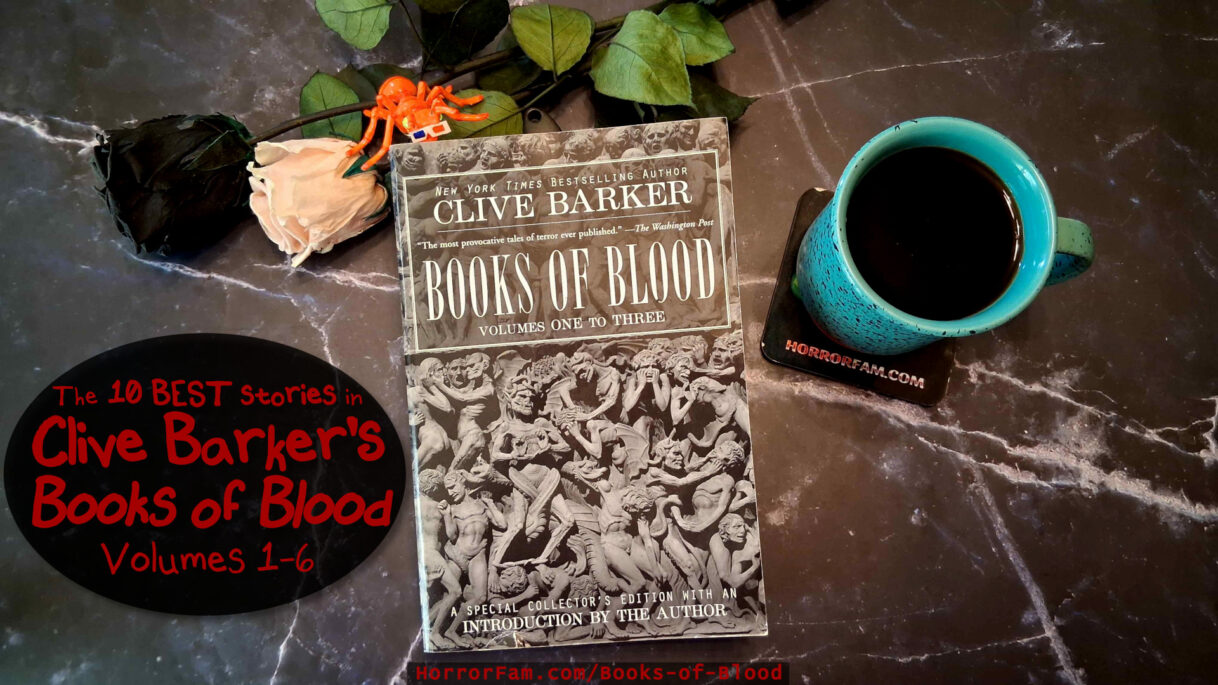
Way back in those far-flung days of 1984, a young man from Liverpool named Clive Barker sat down and, I like to imagine cackling the entire time, wrote six volumes of short horror fiction. These stories would rearrange the furniture of the horror genre permanently. Clive Barker’s Books of Blood landed like a wrecking ball covered in velvet. They were written elegantly, incredibly imaginative, and absolutely soaked through with the sort of stuff that would make your mum put the book face-down and pretend she was never reading it.
Stephen King, not exactly a stranger to horror himself at this point, called Clive Barker “the future of horror.” In this, King wasn’t wrong. His contemporaries may have been out there padding out haunted house stories and slasher sequels, but Barker was doing something wilder: he was creating horror that had ideas. He wrote philosophy alongside the viscera. Longing along with the screaming. Bodies as metaphors and flesh as text! Pain as transformation… Barker’s writing was, and still is now, truly unlike anything else.
So here, after much struggling, I’ve ranked my 10 favorite stories from across the six volumes of Clive Barker’s Books of Blood. Whether you’re a lifelong fan, or someone who just watched Hellraiser and thought “I wonder where all this came from?” consider this your welcome mat. Tread carefully, as there’s a lot of blood on that mat, but the sentiment is sincere…
This post contains affiliate links. Purchasing a book or buying/renting/streaming a film using HorrorFam.com’s Bookshop or JustWatch affiliate links helps to support HorrorFam.com at no additional cost to you.
10. “The Last Illusion” – Books of Blood Volume 6
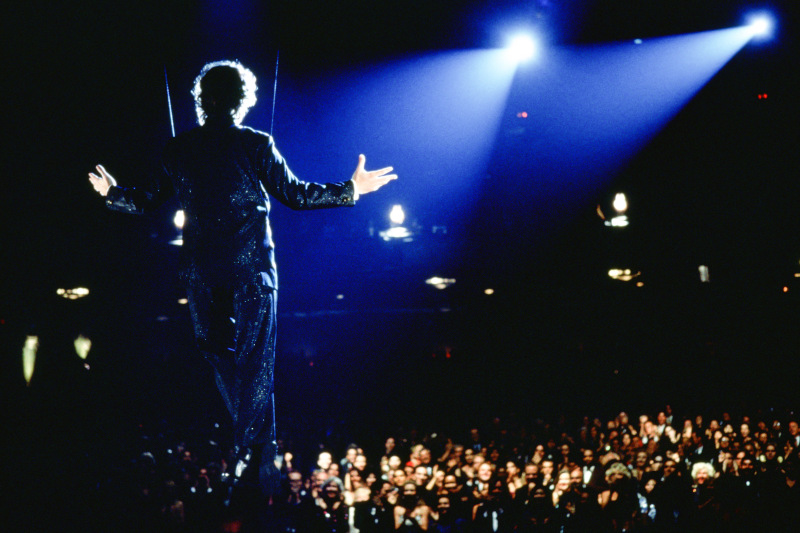
A private detective by the name of Harry D’Amour gets hired to guard the body of recently deceased magician Swann. It sounds simple enough, except for the fact that Swann’s magic was completely real.
Swann’s performances were really summoning, and all those demonic forces he trafficked with have now turned up to collect. What comes next is basically a noir horror, with Harry pulled into a war between fallen angels and servants of darkness, armed with nothing but his wits and an inconvenient habit of caring.
D’Amour is one of Clive Barker’s best characters; he’s a world-weary, decent man with the specialty of encountering the impossible and making sarcastic remarks at it. He’s basically Phillip Marlowe, if Marlowe spent most of his time being mildly disgusted by the actual Devil.
Harry D’Amour would go on to feature in The Great and Secret Show and The Scarlet Gospels, but here we get his origin story and it’s brilliant.
“The Last Illusion” moves at a good pace, delivers some great demonic nastiness and ends on a note of hope. Hard-won and bruised hope, but still hope. It was adapted, very loosely, into 1995s Lord of Illusions by Clive Barker himself, and is worth a watch on a stormy night.
9. “Pig Blood Blues” – Books of Blood Volume 1
Have you ever wanted to feel deeply unsettled but without being quite sure why? Well, then “Pig Blood Blues” is the story for you.
Don’t let the barnyard title fool you, this story lingers way past its last page. Set in a miserable British Young Offenders institution, we follow new officer Redman who discovers that a recently hanged boy had quite an intense relationship with the institute’s pig. A boundary-dissolving, wonderful, and cosmically charged relationship.
Clive Barker has always been interested in the transgressive, in those places where the flesh meets the spirit and the ordinary cracks open to reveal something ancient underneath. “Pig Blood Blues”digs into real folk horror territory before folk horror became fashionable, and channels that particular type of dread that makes you want to stay in a city with good Wi-Fi and a firmly locked door.
It’s bleak. It’s weird. Setting it in the institution makes it feel horribly plausible. And the ending? There’s no comfort there at all. In Barker’s hands, that feels less like cruelty and more like honesty. Not every door opens onto salvation. Some open straight into the sty.
8. “The Body Politic” – Books of Blood Volume 4

If you’ve ever looked at your hands and thought “These things have way too much autonomy” well then congratulations. Clive Barker wrote a story just for you.
“The Body Politic” follows Charlie George, whose left hand develops opinions. Then, it develops ambitions. Then, perhaps not surprisingly, it develops a revolutionary political agenda. The hands of the world are rising up, brothers and sisters, and they are done being the tools of their oppressive wrist overlords.
It sounds absolutely nuts. And it is absolutely nuts. It’s also one of the funniest things Clive Barker’s ever written, and that’s saying something. The man truly has a wicked sense of humor, which surprised me originally as his gore-soaked reputation often hides the fact.
The whole story is a gleeful satire on identity, autonomy, and the fundamental weirdness of being an embodied creature. And it’s all delivered with a totally straight face as severed hands scurry across a hospital floor in cheerful solidarity. The story builds wonderfully, from one escaped hand to a whole army of escaped appendages, and Barker always finds a way to make it both a little ridiculous, and also frightening. There’s a moment when we realize what the hands are building to and it’s one of the great “oh, no” moments in horror.
Body horror doesn’t get more literal, or weirdly philosophical, than it does here. “The Body Politic” is a triumph of the genre.
7. “Jacqueline Ess: Her Will and Testament” – Books of Blood Volume 2

Jacqueline Ess is one of the more extraordinary protagonists in horror literature. Jacqueline is a woman who, following a breakdown and failed suicide attempt, discovers she’s acquired the ability to reshape flesh with her mind. Other people’s flesh. Dramatically. Usually fatally but not always mercifully. It does not go well for men who leer at her.
This is one of Clive Barker’s most explicitly feminist stories. It’s a story about a woman who has been limited, defined, and diminished by all those around her and who suddenly and catastrophically has all the power. The horror is visceral and real, but the sympathy lies squarely with Jacqueline. The men who try to control her gift, or exploit it or even claim her, all find themselves on the wrong end of her will in the most brutal fashion.
What I found really remarkable is how Barker makes Jacqueline terrifying yet totally sympathetic throughout. The tragedy isn’t that she has power. The tragedy is that power alone can’t give her what she actually wants. “Jacqueline Ess: Her Last Will and Testament” is definitely one of the most emotionally complex stories in the Books of Blood volumes, and its ending haunts us in a way that goes far beyond the physical transformations on the page. It’s aged brilliantly because it was doing something that a lot of horror still isn’t; it centers and humanizes a woman’s destructive power and doesn’t punish her for it.
6. “In the Hills, the Cities” – Books of Blood Volume 1
This story makes you put the book down, stare at the ceiling for a while, then pick it up again. “In the Hills, the Cities” is a great horror story but also one of the most audacious and original things you’ll ever read.
Mick and Judd are two lovers touring Yugoslavia when they come across an ancient tradition: each generation, two rival cities assemble their whole population of men, women and children, into a huge human body. These bodies, named Popolac and Podujevo, are miles tall and held together by ropes and harnesses, fighting each other in the hills. This has been done for centuries. This is the story’s whole premise and Barker puts it out there not as fantasy, but matter-of-fact reality.
The imagination here is mind-blowing. These giants aren’t just described from the outside; Clive Barker brings us inside the bodies, with people strapped at elbows and knees, their hopes and fears all collected in one massive collective organism.
“In the Hills, the Cities” is horror that expands your idea of what horror can do. Mick and Judd, supposedly the protagonists, become nearly irrelevant beside the vastness of what Barker imagines. Their love story, their bickering, it’s all dwarfed by Popolac walking into the night, insane with grief, huge and alone. It’s an image that stays with you.
Also, the gay couple at the center here are depicted warmly and with complexity, which was seriously radical for mainstream horror in 1984. Read “In the Hills, the Cities,” then go outside and look at the horizon. You’ll feel very, very small… In the best possible way.
5. “Rawhead Rex” – Books of Blood Volume 3
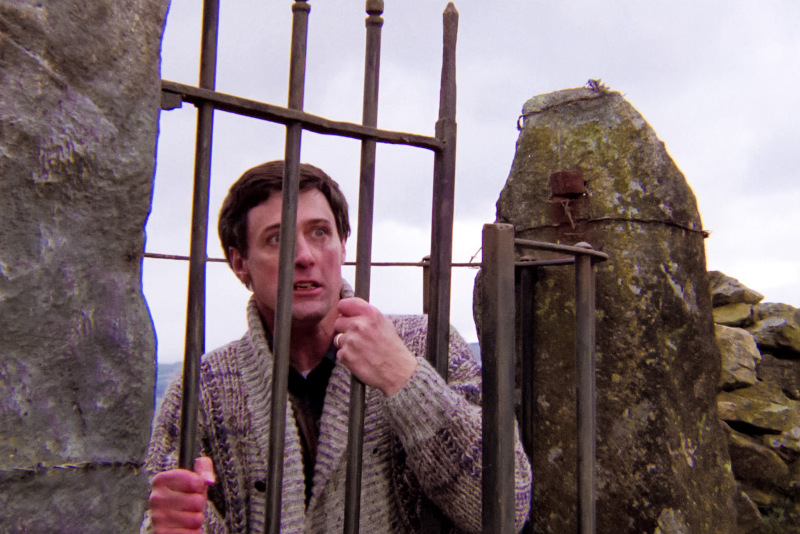
There are some monsters in literature which represent our anxieties. Some are metaphors. Rawhead Rex has no interest in being either of those things. He’s simply nine feet of primeval, testosterone-fueled, absolutely angry ancient terror whose been accidentality dug up by a farmer in rural England, and he has opinions about urbanization, Christianity, and the general softness of humanity these days. He expresses these opinions through enthusiastic murder.
Clive Barker talks about Rawhead Rex as a pre-Christian deity of masculine violence; as something which existed before morality had the nerve to arrive and complicate things. The story is joyfully ferocious, which is a word I don’t get to use much.
As monsters go, Rex is magnificent. He’s pitiless, vast, and operates on a logic so ancient it just about qualifies as thought. You can’t negotiate with him, you can just run and hope for the best.
The story is also darkly funny about rural life in England, which is a bonus. We get a vicar who starts to worship Rex in a scene of brilliant bad taste, which also makes you giggle.
There’s a 1986 movie adaption which is a beloved cult disaster. It features a monster costume that looks like a papier-mâché experiment gone badly wrong, and Barker himself disowned it. That should tell you something. Stick to the story. It’s tremendous.
4. “The Yattering and Jack” – Books of Blood Volume 1
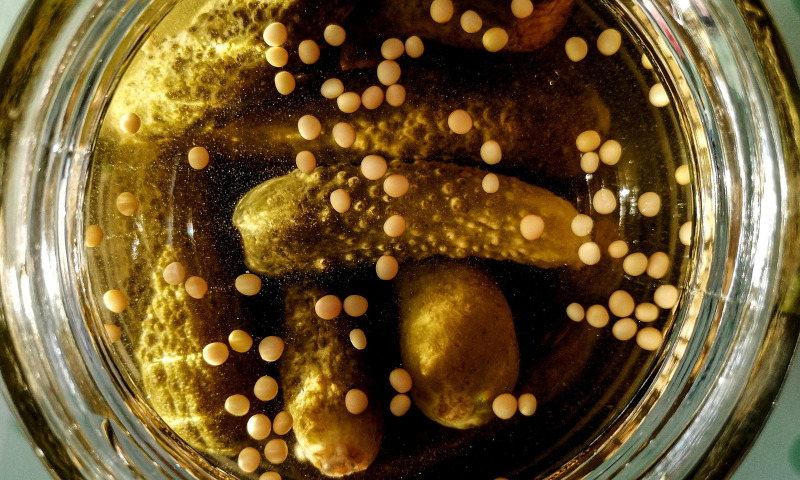
I have to say this again about Clive Barker; he is very funny. Honestly, laugh-out-loud funny. It often gets overlooked due to the steaming pile of intestines nearby. “The Yattering and Jack” is proof of this, and it’s delightful.
The Yattering, a minor demon, has been tasked with driving gherkin importer Jack Polo mad. I even laugh typing that, because ‘gherkin importer’ just sounds so quintessentially English.
Jack is to be tormented into fury or despair so his soul can be collected. There is just one slight problem: Jack is cheerfully and constitutionally, utterly unbothered. He hums to himself and makes tea. Increasingly hysterical supernatural phenomena happens in his house, and he basically shrugs and potters on. The Yattering has the emotional restraint of a toddler throwing a tantrum and becomes more and more unhinged.
It’s read like a dark farce. “The Yattering and Jack” is kind of P.G. Wodehouse by way of Dante and it has perfect comic timing.
But the masterstroke of Barker isn’t that Jack is oblivious. Jack knows the demon is there (there’s a twist!), and it reframes everything beautifully. I think this story showed Clive Barker could do comedy as well as carnage and, in his hands, the two weren’t that far apart. It’s a perfect short story in miniature, and underrated as an entry point to Barker’s work.
“The Yattering and Jack” was adapted as an episode of Tales from the Darkside in 1987 because the premise really is that good. Barker showing the comedic soul underneath all the horror is one of literature’s great pleasures.
3. “The Forbidden” – Books of Blood Volume 5
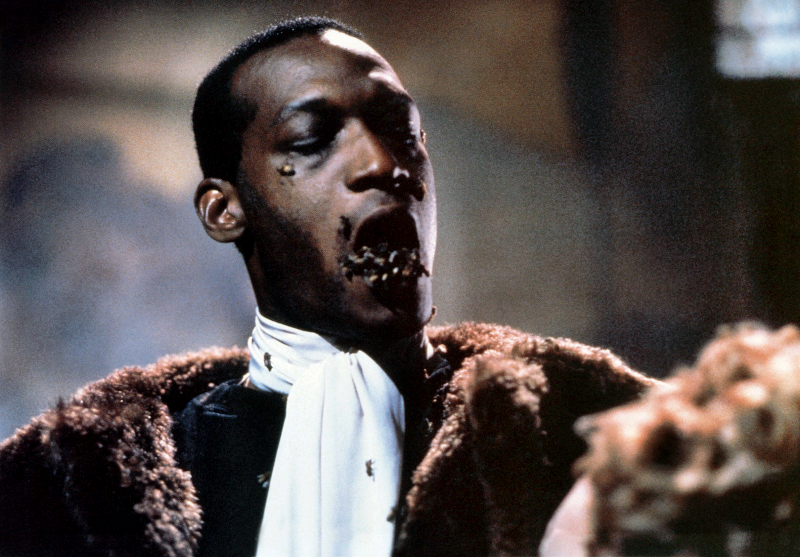
Here, we follow Helen, a graduate student researching urban mythology in a run-down Liverpool estate, gradually becoming entangled with the legend of the Candyman, a hook-handed supernatural menace who, it becomes clear, is very real and specifically interested in Helen. “The Forbidden” is a story about legends, how myths form, what keeps myths going, and the dangerous romance that comes with being chosen by something evil and ancient.
“The Forbidden” is the basis for the 1992 movie Candyman, which is one of horror’s best. The film adaptation transported the story from Liverpool to Chicago’s Cabrini-Green housing projects, which added a strong racial dimension that deepened what Barker was doing with mythology and class. Both versions are essential, and they do different things very well.
The Candyman himself is a creature of fantastic menace. He’s not a typical slasher villain, but something much stranger and older; a creature built from pain and belief and that certain desperation of communities that society chooses to ignore.
Barker makes us feel that broken-down estate as a real and living thing, oppressive and strange as any haunted house. The horror is earned here because the empathy is earned first.
“The Forbidden” politically smart, atmospheric, and seriously creepy. A real masterpiece.
2. “Dread” – Books of Blood Volume 2
I think that if you want to understand what Clive Barker is actually doing, what the deeper project underneath all the flesh and monsters and baroque set pieces is, then you should read “Dread.” It is, I think, the most philosophical story in Books of Blood, and also one of the most devastating.
“Dread” tells the story of Quaid, a student obsessed with fear. Not the experience of it, but rather its mechanisms. What is it that, at the most fundamental level, terrifies a person?
Quaid recruits Steve, a fellow student, to help him explore and document the nature of dread. Steve goes along with this (as one does when confronted by a madman who’s oh-so-compelling) and the results are, maybe predictably in Barker’s universe, destructive.
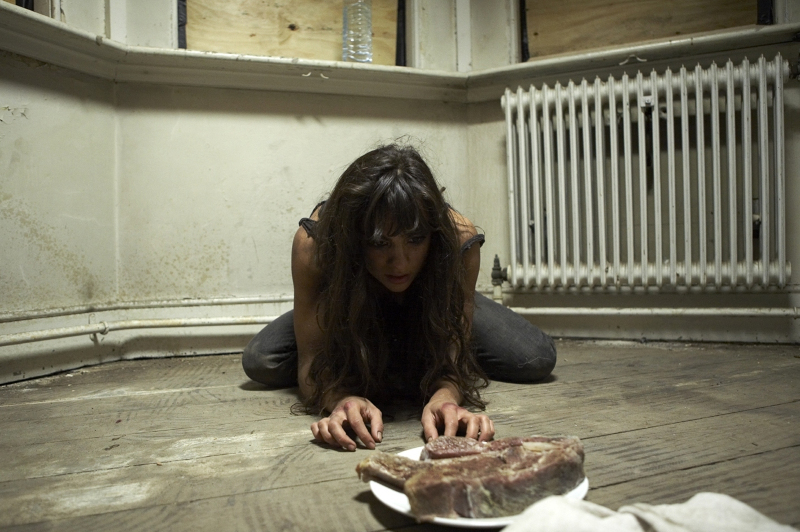
Quaid’s experiments ramp up from the intellectual to the horrific. He starts to imprison people, and forces them to confront their most primal fears; starting with a vegetarian woman who hasn’t eaten meat in years, who’s locked up with nothing but rotting steak to eat. The particular texture of her breaking is one of the more harrowing sequences Barker has ever written. It’s exact, remorseless, and deeply, uncomfortably human. Then, it’s Steve’s turn.
What raises “Dread”up beyond just psychological horror is the compassion in it. Barker isn’t relishing in the suffering of his characters, he’s witnessing it. And in witnessing it, he’s asking us to do the same. There’s no question that Quaid is a monster. But uncomfortably, he’s also a mirror. We’re shaken after reading “Dread” not because of what it shows you, but because of what it suggests about why we kept reading. I think it’s one of the finest stories ever written. Maybe not the most fun, but the most important on this list.
There’s a movie adaption of “Dread” from 2009. It’s thoughtful and worth a watch, but the original story is more savage and devastating. Barker is at his most controlled and merciless.
1. “The Midnight Meat Train” – Books of Blood Volume 1
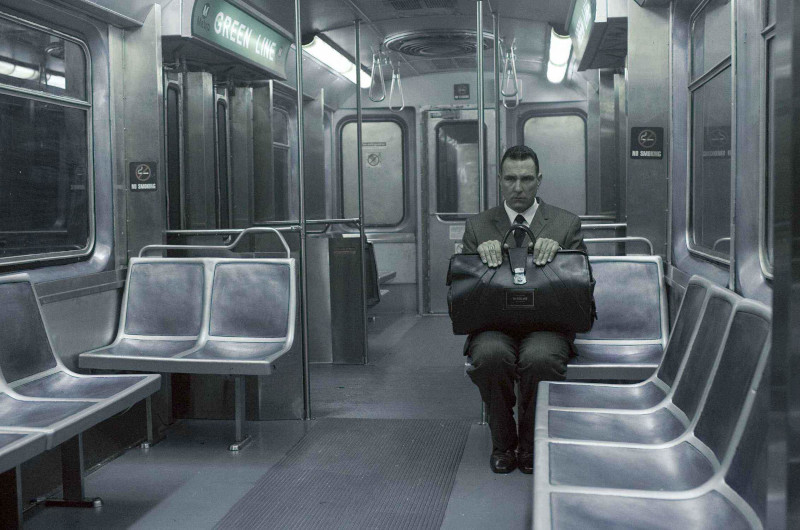
It had to be this at Number One. The first story in the first volume of Books of Blood, “The Midnight Meat Train” announced Clive Barker to the world with all the subtlety of a cleaver to the face. It’s haunted its readers for forty years, and still remains one of the best constructed horror stories in the English language. “The Midnight Meat Train.”Even the title is doing extraordinary work!
“The Midnight Meat Train” tells the story of Leon Kaufman, an insomniac in New York who finally falls asleep on the late-night subway and wakes up with a serial killer. A vast and silent man who carries a bag of meat hooks and other sharp implements. Leon calls him Mahogany, and begins to follow him. He witnesses things he can’t explain and can never forget.
Then, in the breathtaking final act, Leon learns the truth about Mahogany, the subway train, and the city of New York itself. What lives under those grimy streets and keeps the city alive.
Because we’re in Barker’s universe here, and in his universe, cities have appetites and hungers. Ancient ones. It turns out the infrastructure of civilization runs on something older than steel and concrete.
The big reveal which lies at the end of the story is one of the great “what the heck?!” moments in horror literature. It’s logical in its own nightmarish terms, honestly unexpected, and cosmically bleak in a way that makes H.P. Lovecraft look half-hearted.
But what separates “Midnight Meat Train”from mere set-piece horror is how it’s structured. Clive Barker builds the obsession of Leon Kaufman methodically, with the supernatural grounded in the utterly mundane reality of the New York nighttime streets. The horror creeps up on you before it starts sprinting. The pacing is perfect and Barker’s prose, already filled with the baroque richness that would define his career, is totally controlled.
There’s a 2008 adaption of “The Midnight Meat Train” with Bradley Cooper and Vinnie Jones which is solid and underrated, but it just can’t capture the texture of Barker’s prose, and how he can make an ordinary urban world feel both familiar and quietly wrong. That wrongness is completely a product of the writing.
“Midnight Meat Train” is the story which told horror what it could be. And over forty years on, the genre is still catching up. Put it first on your Clive Barker reading list. And any horror reading list. Then you can sleep with the lights on. You’ll have earned it.
The Books of Blood are still essential reading for more than just horror fans.
Clive Barker’s Books of Blood are for anyone who’s interested in what short fiction can do when it fully commits to its own logic. Barker never hedges, or reassures. He takes you somewhere truly strange and leaves you there, blinking and trying to work out whether that experience was beautiful or terrifying. And it’s usually both.
If you haven’t read his Books of Blood, start at Volume 1 and go right through. If you have, this is your reminder that it’s time for a reread. The dead have motorways now, and the flesh is always willing. And, somewhere in those hills, the cities still walk…
***This article was written by Adam Page***
A Note from HorrorFam.com’s Editor:
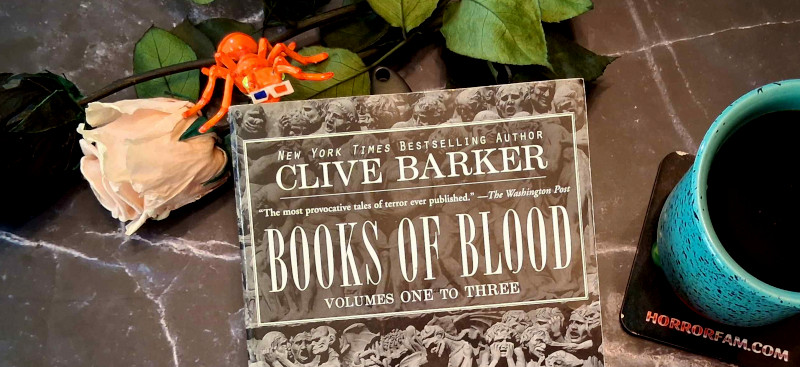
Hey, Everyone! Lauren Spear here. I’m a huge Clive Barker fan and I’d been meaning to write about his stories for years, but kept overthinking it. I was so happy that Adam decided to write this post and have Mr. Barker finally get some representation on HorrorFam.com! All of Adam’s picks for this list are also in my Top 10 for Barker’s Books of Blood (though “The Yattering and Jack” is my personal Number One. And I also have a soft spot for “Son of Celluloid” in Volume 3 for reasons I don’t quite have the words to explain).
I also agree with Adam that the Clive Barker’s books/stories are FAR better in written form; however, the movie versions are still pretty fun and can sometimes be a good way to measure if you can “handle” the original stories. As Adam mentioned, Clive Barker does NOT hold back… and the movies, as rowdy as some of them are, DO.
When I was a tween and my dad determined that the Clive Barker books weren’t “age appropriate” reading material, he let me watch the movies (which, could be argued, weren’t necessarily age appropriate either, but they’re MORE appropriate and I desperately wanted to be included/connected with what Dad was reading). And I think that was a GOOD way for me to get into Clive Barker’s adult material (he also writes AMAZING children’s horror books!!). I was able to see the themes/ideas/gore in a “tamed” manner, always knowing that “the books are better,” and then it was an extra special treat to finally get to experience the stories as they were intended by reading the books as an adult.
Even if you’re not too young or too sensitive to dive into the books immediately, it’s still really fun to experience BOTH the books AND the films. I’m of the opinion that the books are better for nearly ALL of the Clive Barker adaptations, but I prefer Hellraiser to “The Hellbound Heart” (the big exception to the Rule) and I thought a lot of the changes in Candyman compared to “The Forbidden” made it equally great (switching the setting to Chicago and having Tony Todd in the lead make the film BETTER, but the film’s uneven pacing makes it worse so it evens out).
Anyway, I’m going to include links to where film adaptations of the stories Adam mentioned from Clive Barker’s Books of Blood are streaming now, in case you’d like to watch them!
Where to watch Candyman (adaptation of “The Forbidden”)
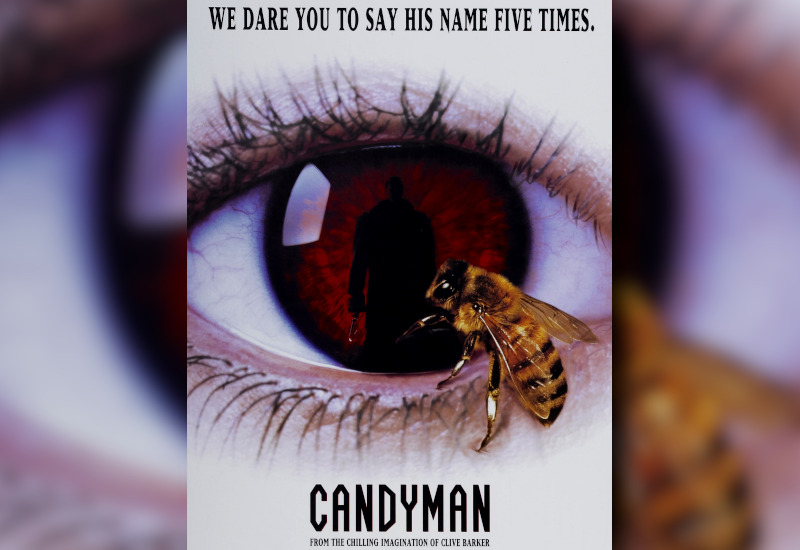








Candyman | Rated R | Runtime 1h 39m | Released October 16, 1992
Where to watch Lord of Illusions (adaptation of “The Last Illusion”)
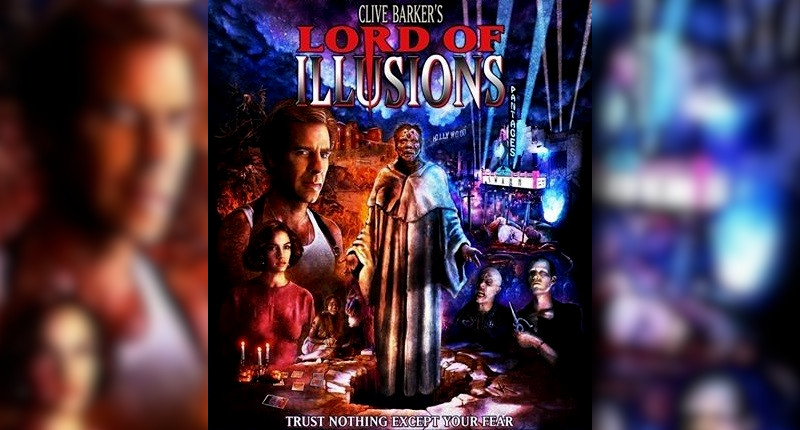






Lord of Illusions | Rated R | Runtime 1h 49m | Released August 25, 1995
Where to watch The Midnight Meat Train
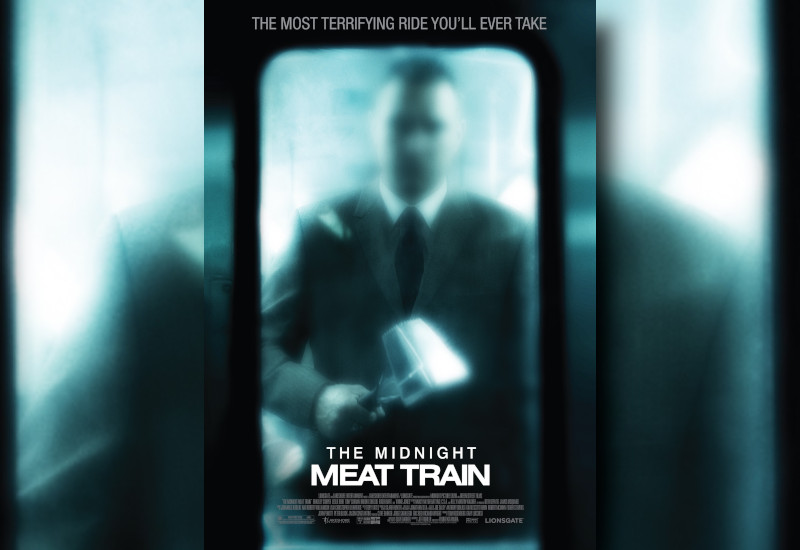




The Midnight Meat Train | Rated R | Runtime 1h 40m | Released August 1, 2008
Where to watch Dread
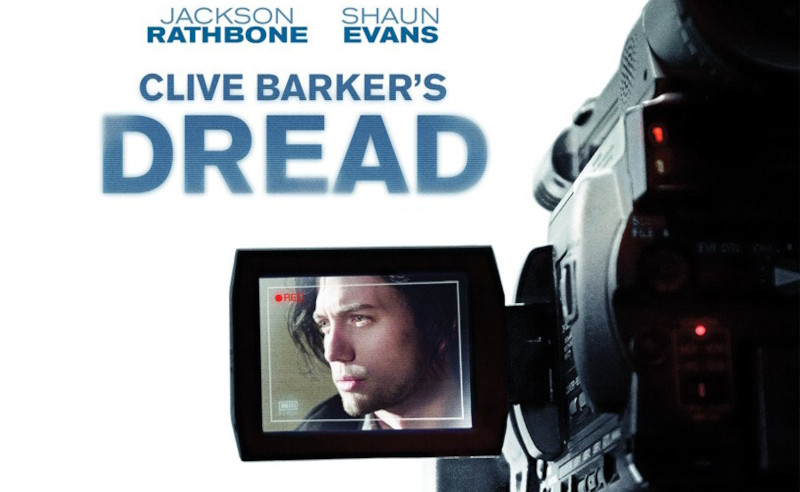
Dread | Rated R | Runtime 1h 38m | Released August 30, 2009
Where to watch Rawhead Rex
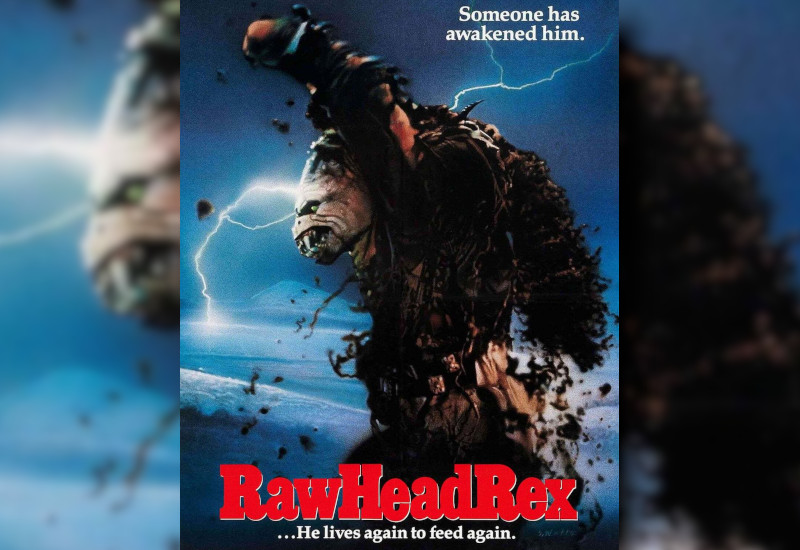



Rawhead Rex | Rated R | Runtime 1h 29m | Released October 14, 1986
Where to watch Tales from the Darkside Season 4; Episode 7 (adaptation of “The Yattering and Jack”)
Tales from the Darkside S4Ep7 | Rated TV-14 | Runtime 22m | Released November 8, 1987
Images for this article are a mix of movie stills purchased via MovieStillsDB, movie posters purchased via CineMaterial, free non-AI stock photos from Pixabay that are vaguely related to what the stories are about, and the featured image is a photo Lauren took of the Books of Blood Volume 1-3 she gave her husband Frank back when they were dating (she was scrambling trying to find her own copies of the books to photograph when Frank swooped to the rescue!).