
When Freddy Krueger first invaded our dreams in 1984 he revitalized a slasher genre that was rapidly becoming stale, thanks to a deluge of lazy, cynical pictures looking to cash in on the craze. The slasher film, it seemed, was headed for an early grave. But A Nightmare on Elm Street was different.
A Nightmare on Elm Street’s antagonist, Freddy Krueger, was not just another masked psychopath – he was a supernatural trickster who could enter your dreams while you slept and, if you were unlucky enough, ensure you never woke up again. “If he kills you in your sleep you die for real,” explained many an 80’s teenager to their friends when attempting to summarize the movie’s premise.
Thanks to its startling new twist, 1984’s A Nightmare on Elm Street took slasher movies into the realm of the imagination, opening them up to the possibilities of psychological introspection and Salvador Dali-style surrealism.
If you’re a first-time visitor to Elm Street and unsure of where to begin your tour, here’s my lowdown of every film in the franchise, running from the very worst to the very best.
This post contains affiliate links. Our content is 100% reader-funded and if you watch a movie we’ve recommended using our links, you’ll be helping to support HorrorFam.com at no additional cost to you!
9. A Nightmare on Elm Street 6: Freddy’s Dead (1991)

A Nightmare on Elm Street 6 AKA Freddy’s Dead: The Final Nightmare is set ten years after the events of the previous Nightmare on Elm Street film, NOES 5. By now, Freddy Krueger has managed to kill off almost every teenager in the town of Springfield, Illinois. With no kids left to dream him into existence, he’s effectively powerless. However, when Springfield’s last surviving teenager accidentally wanders into the town’s limits, Freddy has the opportunity to return for another round of mayhem.
Freddy’s Dead was billed as Freddy Krueger’s last hurrah and the concluding movie in the NOES franchise. Arriving when Nightmare on Elm Street was struggling with creative exhaustion and dwindling audience interest, this was an attempt to send Freddy on one last killing spree and provide his fans with some closure.
Does it succeed? Not really.
Freddy’s Dead certainly gets some marks for effort. Rather than recycling the familiar old conventions it aims for something almost avant garde, mixing the horror with zany references to The Wizard of Oz and Warner Bros. cartoons. The problem is that it never quite pulls these elements together into a cohesive whole, resulting in a film that is both uneven and underwhelming.

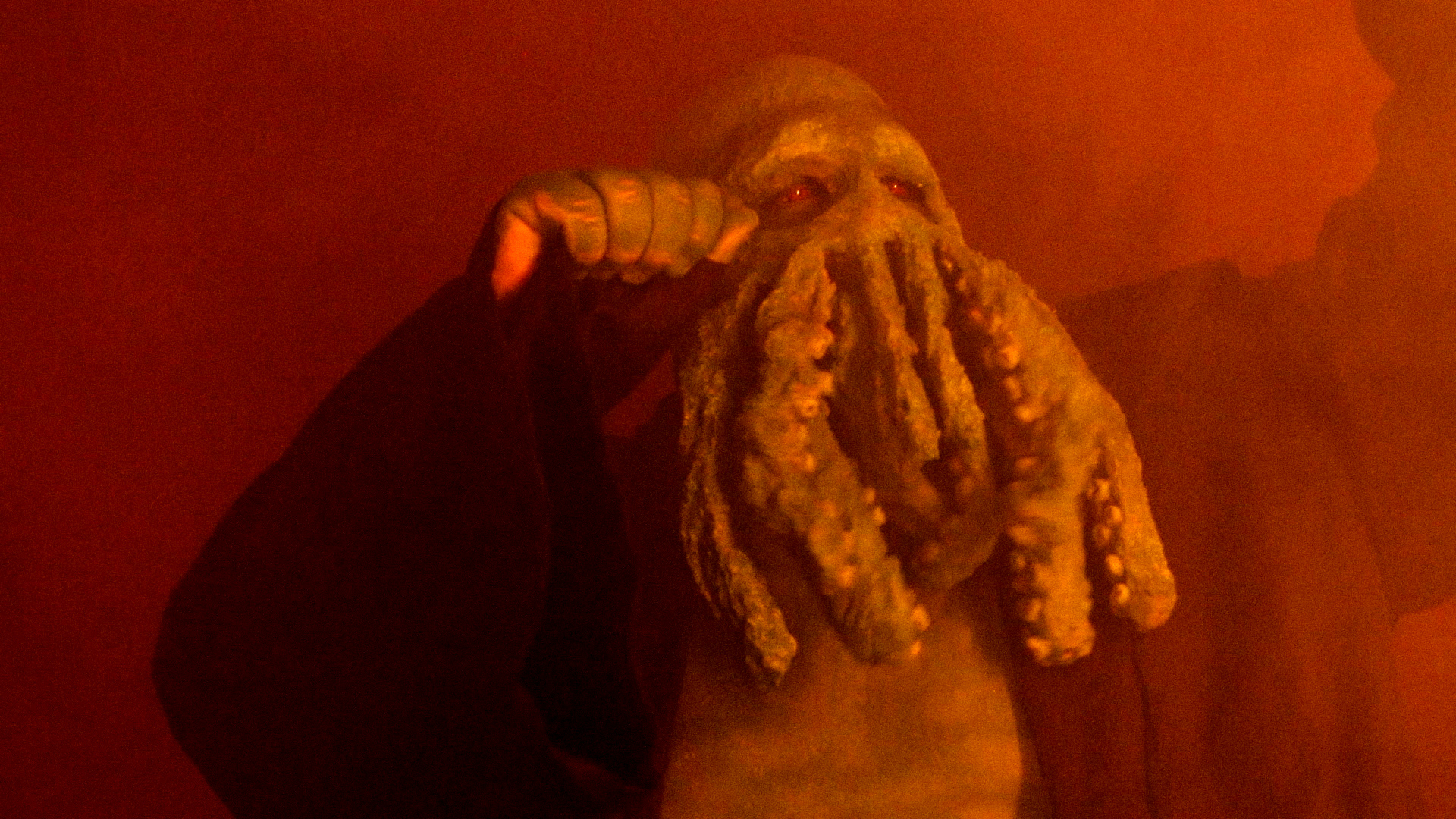
Compounding this is the worst MacGuffin in the history of MacGuffins, in the form of ancient, metaphysical “dream demons” that have supposedly been the source of Freddy Krueger’s dream-penetrating power all along. In reality, they look more like sock puppets contrived by a beleaguered special effects team short on both budget and time.
Considering Nightmare on Elm Street 6: Freddy’s Dead was meant to be the movie that finally killed off Freddy, the star of the series deserved a bigger and better farewell. Luckily, in best slasher film fashion, he would be resurrected again only a few years later – proving once again that horror legends never really die.
Where to Watch Freddy’s Dead: The Final Nightmare (1991):








8. A Nightmare on Elm Street 5: The Dream Child (1989)

The Dream Child is perhaps the most forgettable entry in the Nightmare on Elm Street series. Not bad enough to be truly awful, but not good enough to remain etched into memories for long.
If Nightmare on Elm Street 5 is remembered at all, unfortunately, it’s for the silliness on display. The comedic elements that had leaked into the franchise during previous films are taken to new extremes with The Dream Child committing the unforgivable offence of a skateboarding Freddy. If your introduction to Elm Street was this cartoonish, wisecracking version of Freddy Krueger, you might have no idea how malevolent he’d once been.

In Nightmare on Elm Street 5: The Dream Child’s plot, Freddy Krueger attempts to use the unborn baby of our protagonist, Alice (Lisa Wilcox), as a portal from nightmares to reality. There’s an especially grotesque sequence in the last act in which Freddy’s infant son is born into the world, kicking and screaming and looking just as macabre as you’d imagine.
Rewatching The Dream Child today occasionally feels like childbirth. Like childbirth, however, there is some joy interwoven into all the blood and pain – just not enough for the movie to warrant a higher place on this list.
Where to Watch A Nightmare on Elm Street 5: The Dream Child (1989):


7. A Nightmare on Elm Street (2010)

For many fans of the series, the 2010 remake of the original A Nightmare on Elm Street, starring Jackie Earle Haley (who replaces Robert Englund as Freddy Krueger), would come a decisive last on any Best Of list – if it even warranted a place at all.
Part of the problem is the absence of the great Robert Englund, who’d played Freddy in every previous instalment (as well as an ill-fated television series). Robert Englund isn’t just synonymous with Freddy Krueger. He is Freddy Krueger. Trying to imagine Freddy without him would be like trying to imagine Child’s Play’s killer-doll Chucky without the voice of Brad Dourif.

It was Englund’s manic, having-far-too-much-fun performance that had defined the character. Removing Robert Englund from the equation, critics argued, was like taking away Freddy’s finger knives and arming him with a water pistol.
That being said, Jackie Earle Haley actually does a good job in his stead. Haley’s performance may lack the energy and humor of Englund’s, but he was able to make the character genuinely sinister again. Thanks to this determination to take the series back to its dark roots, the remake manages to be something the Elm Street films hadn’t been for a while: scary.
Where to Watch A Nightmare on Elm Street (2010):
6. A Nightmare on Elm Street 2: Freddy’s Revenge (1985)

Freddy’s Revenge has sometimes been dismissed as an awkward stop-gap between the break-out first movie and the transformative Dream Warriors – as the Elm Street equivalent of a rock band’s difficult second album.
In truth, it’s actually much more, thanks to underlying themes that were not immediately obvious to those who watched it on its first release in 1985. You see, what many of us failed to spot amidst the innocence of our 1980’s childhoods were the film’s subtle (and sometimes not so subtle) homoerotic undertones.

In Freddy’s Revenge, the final girl is not a girl at all but a final boy, played by Mark Patton. It does not stop there. Teenage boys dance around their bedrooms like the backup dancers in a Bananarama music video, while sadomasochistic gym teachers are whipped to within an inch of their lives in steamy shower scenes.
Prefiguring modern queer horror like I Saw the TV Glow (2024), it’s a Freddy Krueger movie whose reputation has grown as its subtext (bold by the standards of its time) has become increasingly apparent.
Where to Watch A Nightmare on Elm Street Part 2: Freddy’s Revenge (1985):
5. A Nightmare on Elm Street 4: The Dream Master (1988)

The Dream Master is dear to the hearts of many Elm Street fans. Followed as it was by a run of uninspiring sequels and unexpected left turns, it can justifiably claim to be the last great old-school Freddy movie.
The picture features a neat concept, in which the heroine (Lisa Wilcox’s Alice) inherits the powers of her friends each time one of them is picked off by Freddy. By the end of the film the demure Alice has been transformed into a kung-fu kicking badass, finally ready to confront Kruger with the various skills she’s absorbed from her murdered companions.
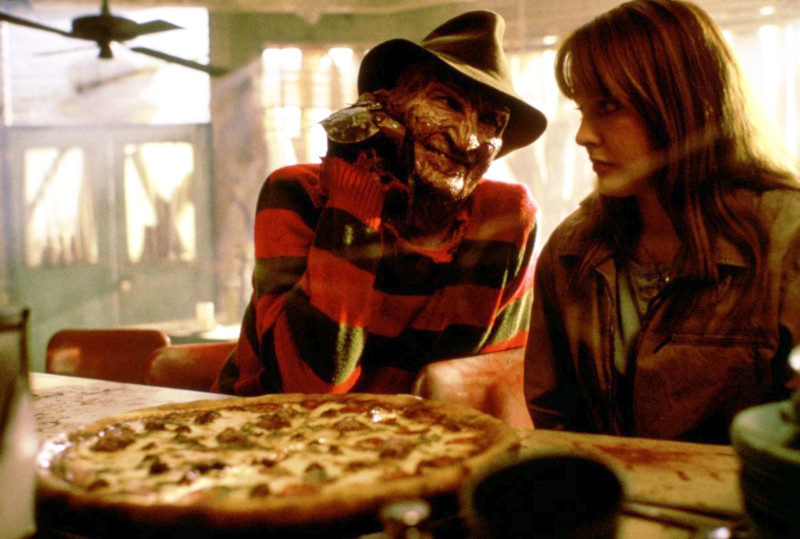
By the time Alice and Freddy square off, she’s more than a match for him. There’s real emotional pay-off in watching her slap her tormentor around in the film’s finale, delivering a satisfying revenge on behalf of the likeable gang of teenage friends she’d lost to his blades.
You’ll feel pretty good about things, too! You might not be ready to take on Freddy yourself, but you’ll certainly be in the mood to watch others try.
Where to Watch A Nightmare on Elm Street 4: The Dream Master (1988):
4. Freddy vs. Jason (2003)
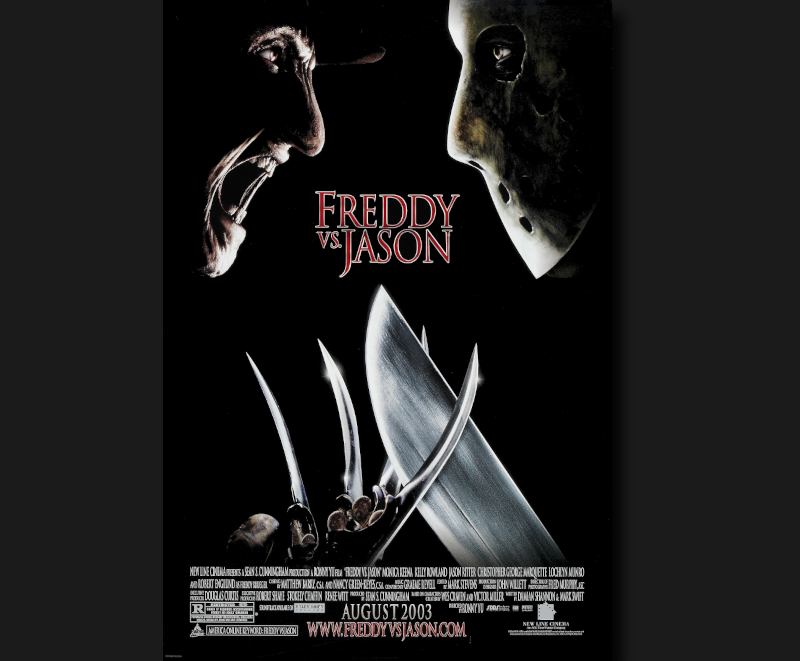
The question of who would win in a showdown between Freddy Krueger and Jason Voorhees was the subject of countless conversations between ’80s and ’90s horror fans – the nerdy kid’s equivalent of debating a hypothetical bout between Muhammad Ali and Bruce Lee.
In Freddy vs. Jason, the crossover slasher that united the Nightmare on Elm Street and Friday the 13th universes, fans finally got to find out who’d come out on top.
When Freddy Krueger is forgotten and no longer feared by the teenagers in his Springfield hunting ground, he finds himself locked in a kind of dream demon purgatory. If the kids don’t remember him, they can’t fear him, and if they don’t fear him there will be no new nightmares for him to materialize into. Without those nightmares, Freddy is effectively dead (for real this time). What he must discover is some means to remind his teenager prey of what terror feels like.
And this is where Jason Voorhees enters the narrative. Krueger realizes that if he can convince his Friday the 13th counterpart to commit a few murders of his own, it will instill more than enough fear in the Elm Street kids for them to have their all-important nightmares again.

Predictably, however, Jason refuses to be manipulated so easily, leading to rapidly-escalating tensions between the two slasher stars and an outrageous final confrontation that has to be seen to be believed.
The best news for A Nightmare on Elm Street fans is that Freddy Vs Jason feels like an Elm Street movie first, and a Friday the 13th movie second. It’s Jason whose been dropped into Freddy’s world, rather than vice versa. Everything unfolds with the crackling, mischievous energy of Elm Street’s antihero, rather than the plodding predictability of Mr. Voorhees.
It would be tempting to say that this horror crossover shouldn’t work. But it absolutely should. And thankfully, it does.
Where to Watch Freddy vs. Jason (2003):

3. Wes Craven’s New Nightmare (1994)

As the name suggests, New Nightmare saw the return of the series’ mastermind, Wes Craven. True to form, Wes Craven’s reunion with the franchise did not go in the direction that fans might have been expecting. Instead, the horror maestro chose to employ the meta, self-aware approach that he would later adopt for 1997’s Scream (in which he gave us a horror movie that knew it was a horror movie and a group of vulnerable, disposable teenagers who were horror-literate enough to know just how vulnerable and disposable they really were).
Wes Craven’s New Nightmare is in many ways the forerunner to Scream. Craven has it take place not in the Elm Street universe but the real world. Here, Freddy Krueger is not a supernatural demon but a fictional character in a struggling horror franchise. Wes Craven appears as himself, as do various other individuals associated with the franchise.
When the story begins, a crew of filmmakers have decided to make a new Nightmare on Elm Street picture, hoping to reinvigorate the franchise and rescue it from the self-parody it has descended into. However, after scenes from their script are replicated in real life, it becomes clear that Freddy Krueger has somehow escaped from the cinema screen and is committing his kills for real this time.

This is not an Elm Street movie as much as it is a movie about an Elm Street movie.
As well as being a smart idea, New Nightmare was Wes Craven’s commentary on what his franchise had become, lamenting how Freddy Krueger had been turned from a child killer into a piece of pop culture ephemera, slapped on lunch boxes and wheeled out on early-morning talk shows. It was Craven’s attempt to make us fear his creation again and to remind us that, before the comic books and video games, Freddy had once been the embodiment of all our primal childhood fears.
Where to Watch Wes Craven’s New Nightmare (1994):
2. A Nightmare on Elm Street 3: Dream Warriors (1987)

Quentin Tarantino once laid out the definition of a great horror sequel: Rather than elevated body counts and gore, Tarantino explained, a truly rewarding follow-up is one that enriches the mythology of the original movie, presenting its audiences with new information about the universe. Run-of-the-mill sequels stick to the format of their predecessor and throw in a few extra kills, but the best ones manage to add new layers to their worlds.
Dream Warriors does just that, fleshing out Freddy’s backstory and placing the character in a fresh and unfamiliar setting.
That setting is a psychiatric hospital in which the teenage patients all appear to be suffering from a kind of group hysteria, each of them convinced that a badly burned maniac is preying upon them in their dreams. Their physician Dr. Neil Gordon (Craig Wasson), meanwhile, grudgingly comes to believe that the shadowy figure they describe is not so imaginary after all – suspicions that are confirmed when the kids fall victim (sometimes literally) to a series of bizarre deaths. It’s an inspired idea (courtesy of a script from series creator Wes Craven) and it makes for a classic Elm Street movie.

Some, however, remember Dream Warriors less fondly as the Elm Street film that first began to transform Freddy Krueger from a cruel psychopath into a more playful anti-hero. They’re not wrong. The series is having a little more fun than audiences were accustomed to, each kill sequence getting more and more outrageous and usually culminating in a snappy one-liner from Krueger himself.
However, while subsequent films may have gone too far in this direction, Dream Warriors manages to get the delicate balance just right, combining the laughs with enough scares for hardcore horror fans. Later, Freddy might have become somewhat of a joke, but in Dream Warriors he is both funny and frightening.
For many fans, Dream Warriors remains the standout entry into the series. So, dig up a copy and position yourselves in front of your television sets. Just make sure you don’t get too close. “Welcome to primetime, Bitch!”
Where to Watch A Nightmare on Elm Street 3: Dream Warriors (1987):
1. A Nightmare on Elm Street (1984)

When P.P. Arnold sang that “the first cut is the deepest,” she could have been referring not only to love, but to the A Nightmare on Elm Street series. Even after all these years, and all the subsequent sequels, crossovers and remakes, the finger knives of Freddy Krueger were never sharper than they were in the 1984 movie that started it all off.
Never has Freddy ever been as terrifying. It might surprise the later generations who know him as a somewhat camp figure, but when A Nightmare on Elm Street first arrived on cinema screens, Fred Krueger was the scariest thing since Linda Blair projectile vomited in 1973’s The Exorcist.

The film’s ability to shock its viewers to their core was no fluke. As well as Robert Englund’s demented performance as Krueger, there’s excellent direction by Wes Craven, innovative special effects work, a spine-chilling score from Charles Bernstein, and perhaps the greatest Final Girl of all time in Heather Langenkamp’s Nancy.
Oh yes, it also contained the feature film debut of a young actor by the name of Johnny Depp.

On top of everything else, A Nightmare on Elm Street boasted a central premise that was pure gold. A notorious child murderer, killed by vigilante parents, coming back from the dead to stalk the nightmares of those parents’ kids, is surely one of the greatest concepts in horror movie history. For any 1980’s movie producer in search of fresh ideas, it must have been the stuff of dreams rather than nightmares.
Like Freddy Krueger himself, A Nightmare on Elm Street seemed to derive a perverse pleasure from terrorizing its audiences. The fear it inflicted upon them with was as cerebral as it was physical, reaching into corners of their psyche they hadn’t known existed and playing with their deepest fears like a maestro plucking at the strings of a violin. It was a weird combination of trashy horror and psychoanalytical, expressionistic filmmaking that perhaps only Wes Craven was capable of.
Other horror movies might have given their audiences the occasional nightmare, but never had those nightmares felt as deadly as they did in the original A Nightmare on Elm Street. If you’re going to start anywhere, therefore, you should start at the beginning.
Where to Watch A Nightmare on Elm Street (1984):
Do you agree with my rankings…?

Unfortunately, the Nightmare on Elm Street series never quite reached the high points of its breakthrough first picture again. New Line, the production house born from the first NOES, churned out one Freddy movie after another until the format became stale… and then it churned out some more.
Nevertheless, every film in the A Nightmare on Elm Street franchise has its merits. Every time Freddy Krueger showed up in the nightmares of a new batch of teens, with his green-and-red sweater and finger blades, there was at least one surprise hidden under his battered fedora hat.
If you do embark on a mammoth Nightmare on Elm Street marathon, be aware that you’ll likely need to stay up all night if you’re going to watch each and every movie in the sprawling series. Then again, after witnessing what Freddy can do to his victims in their slumber, staying awake might not feel like such a bad thing. You may even resolve – as Heather Langenkamp’s heroine Nancy once did – to never sleep again.
***This article was written by Rhys Peregrine. You can learn more about him in his author bio below!***

Images for this article were purchased on CineMaterial and MovieStillsDB.